MDes Thesis
Jan 2024 — May 2025
Human-Centered Design | Speculative Design | Service Design
Figma | Blender | Unity | VR on Meta Quest | 3D Print
InstaCare
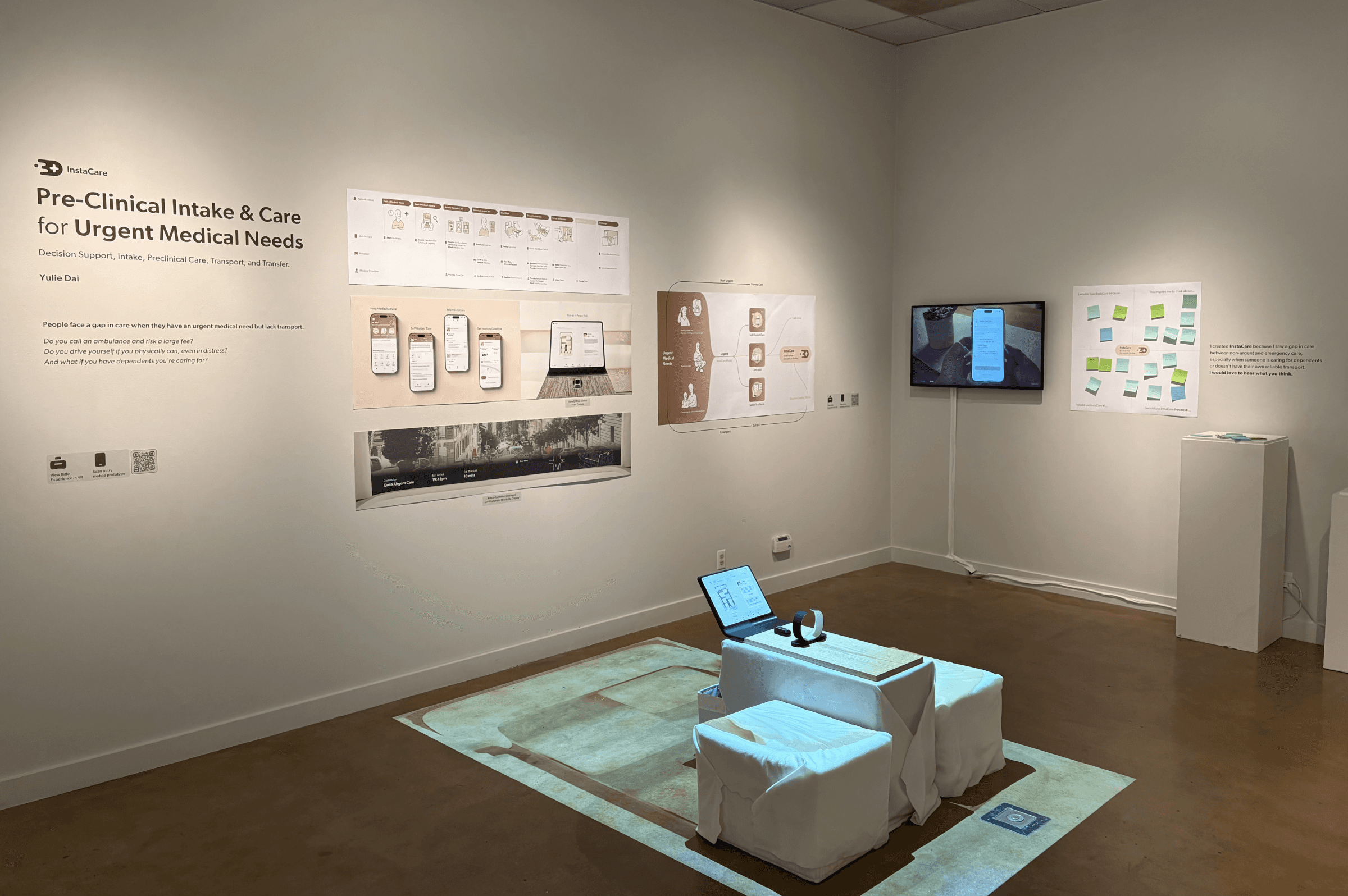
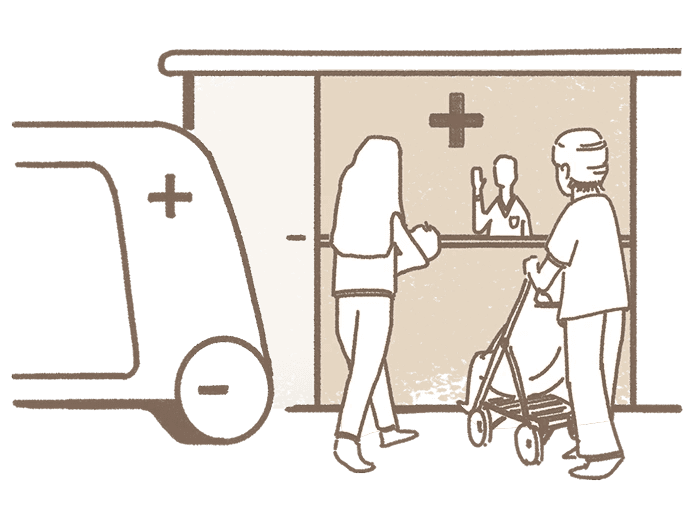
This project explores how autonomous mobility on demand (AMoD) could support urgent patient care and transfer, filling the gap between calling an ambulance and relying on personal transport. By deploying AMoD for medical needs, a new model of care can emerge—transforming the mobile space into an extension of hospitals and clinics that supports decision-making, intake, preclinical care, and transfer.
Initial Problem Statement
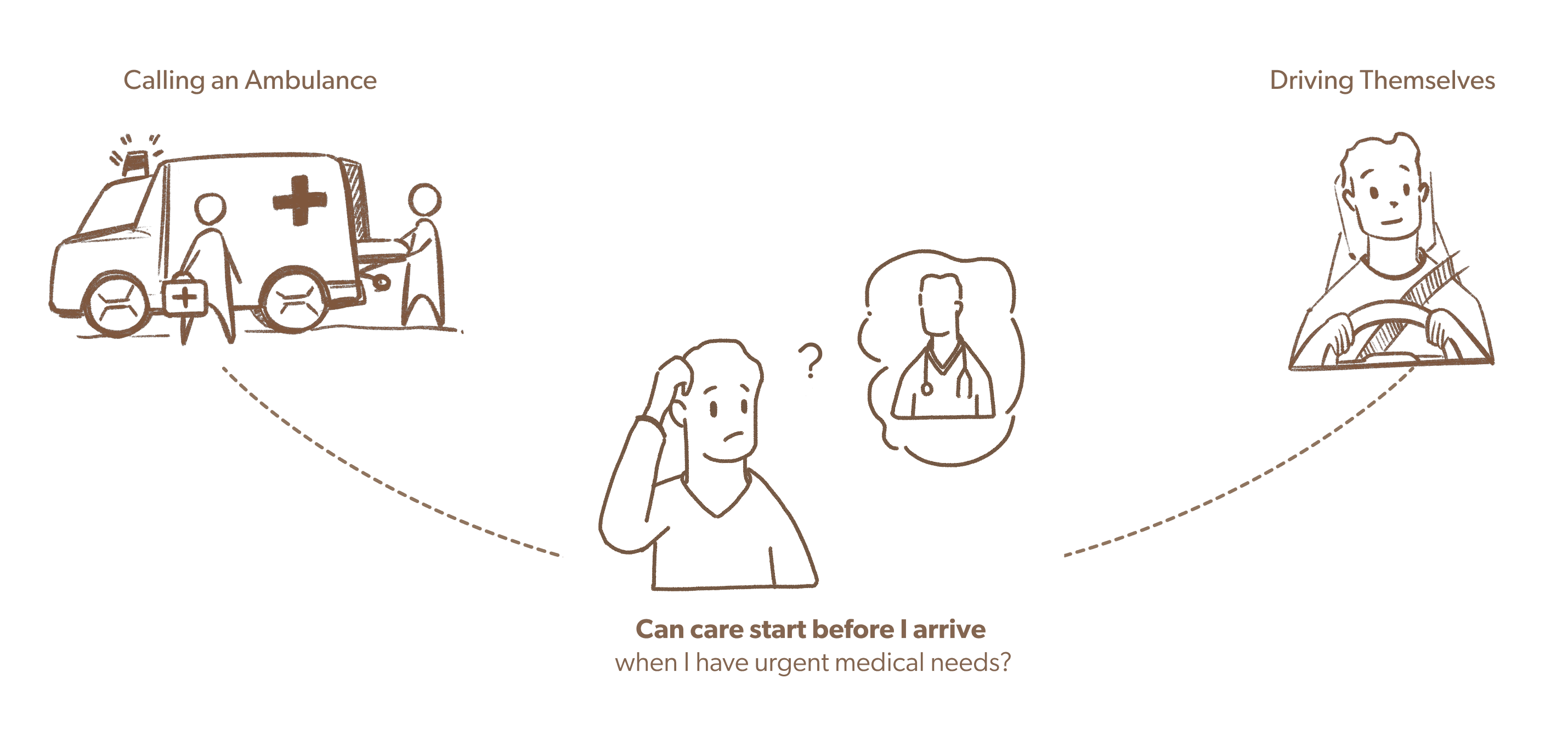
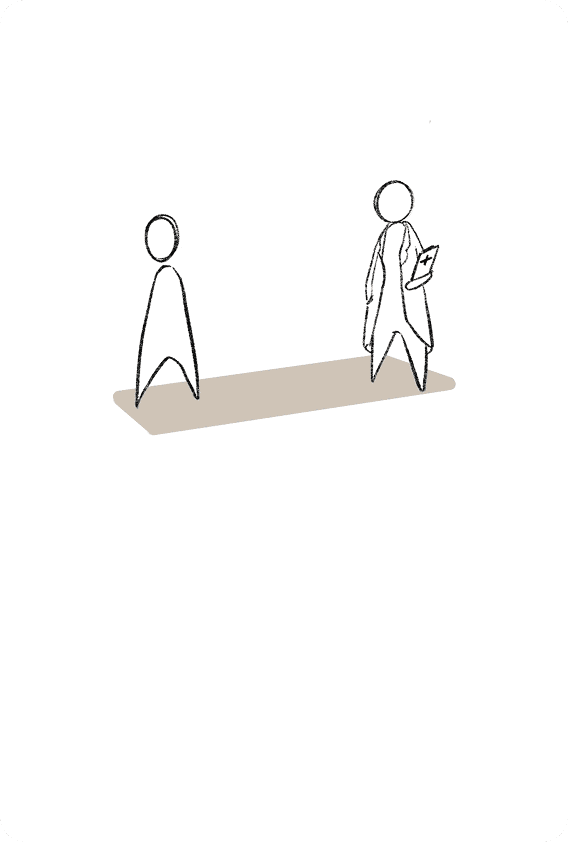
Within the current spectrum of medical transport services, people face a gap in care between calling an ambulance and driving themselves.
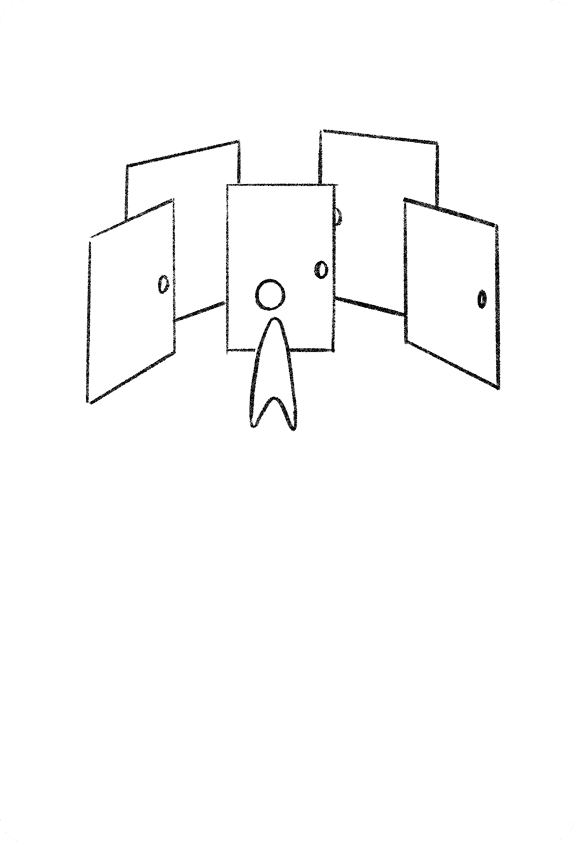
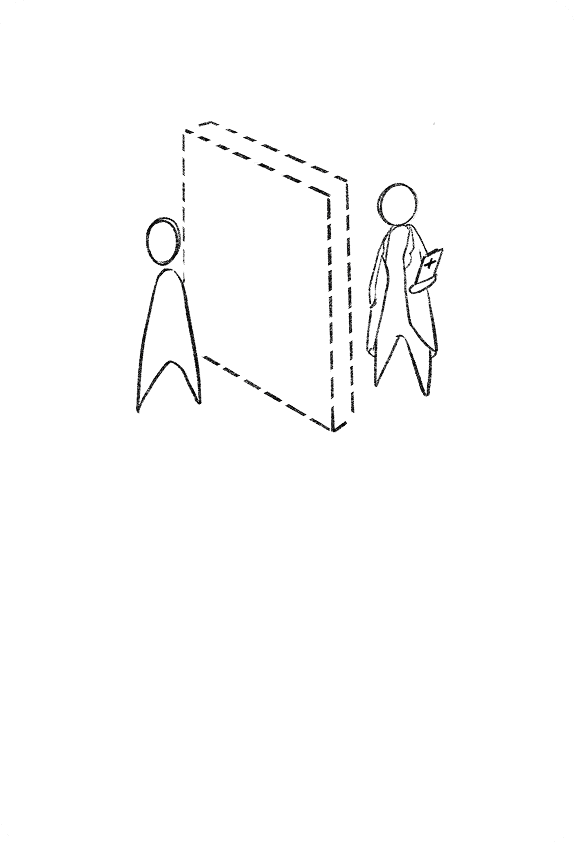
Reframed Problems
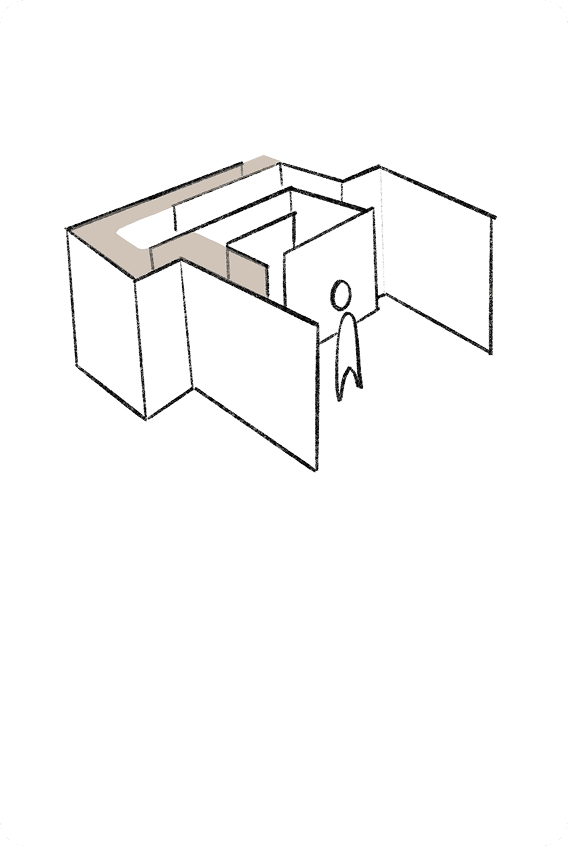
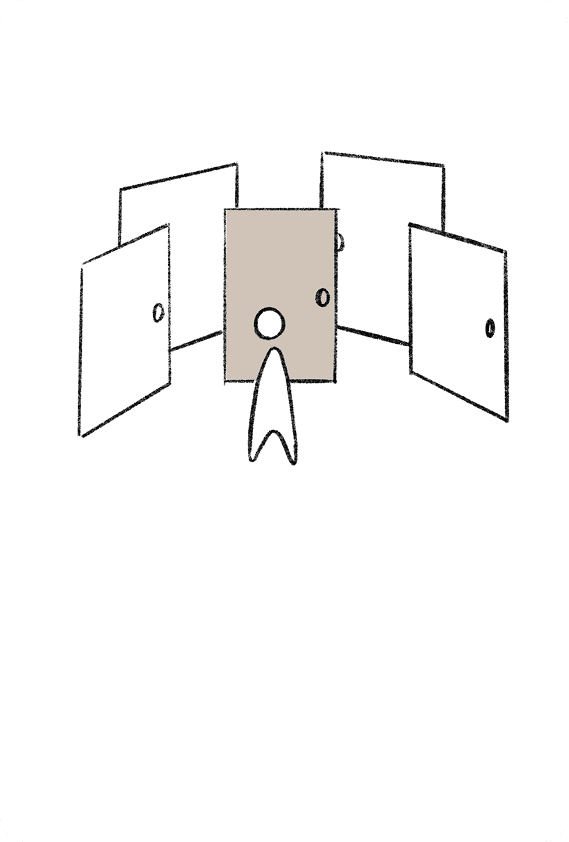
Opportunities
Validated Design
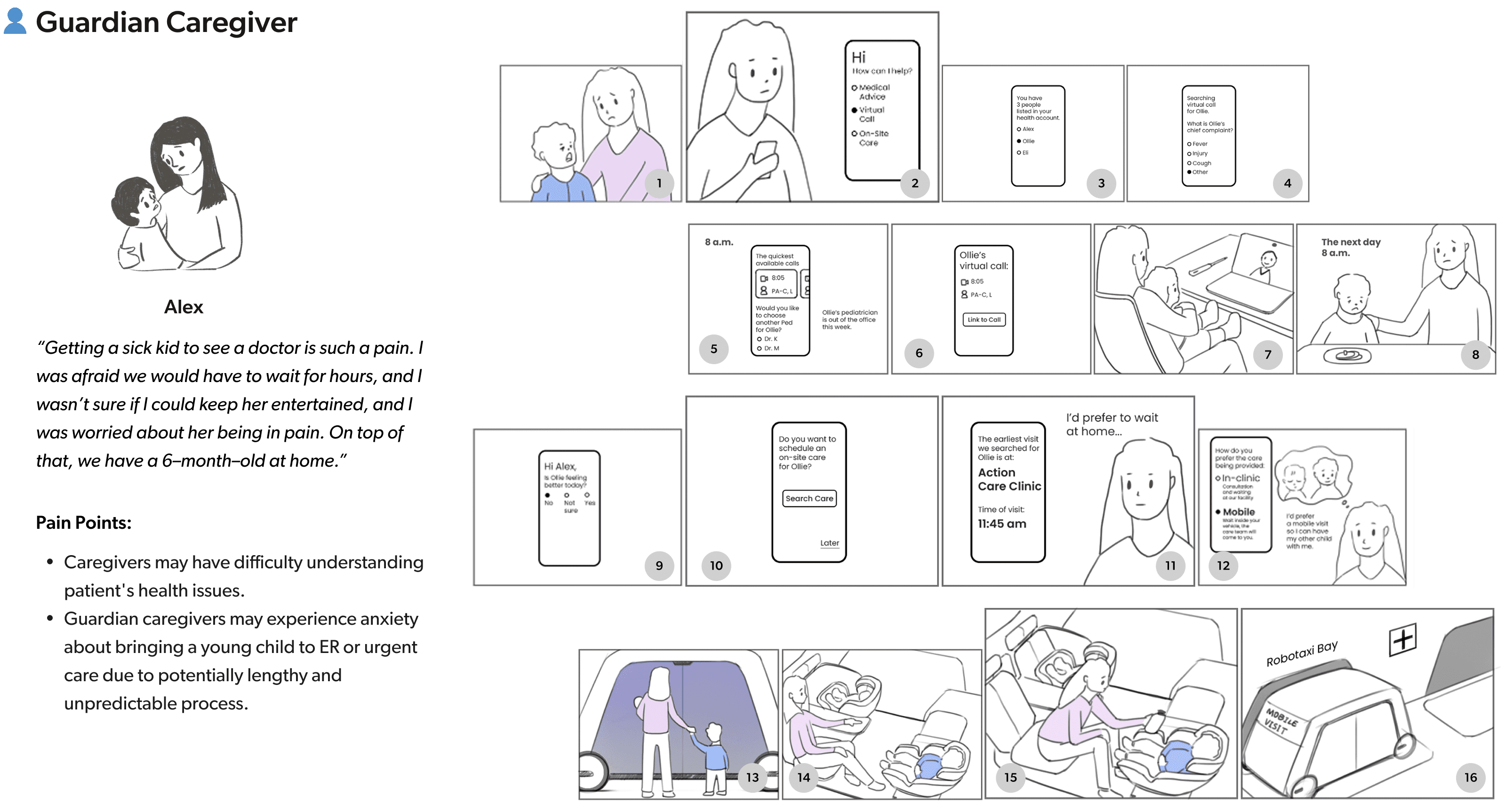
Alex, a mother caring for her 6-year-old daughter, Ollie, and a baby at home.


Guided Self-Care
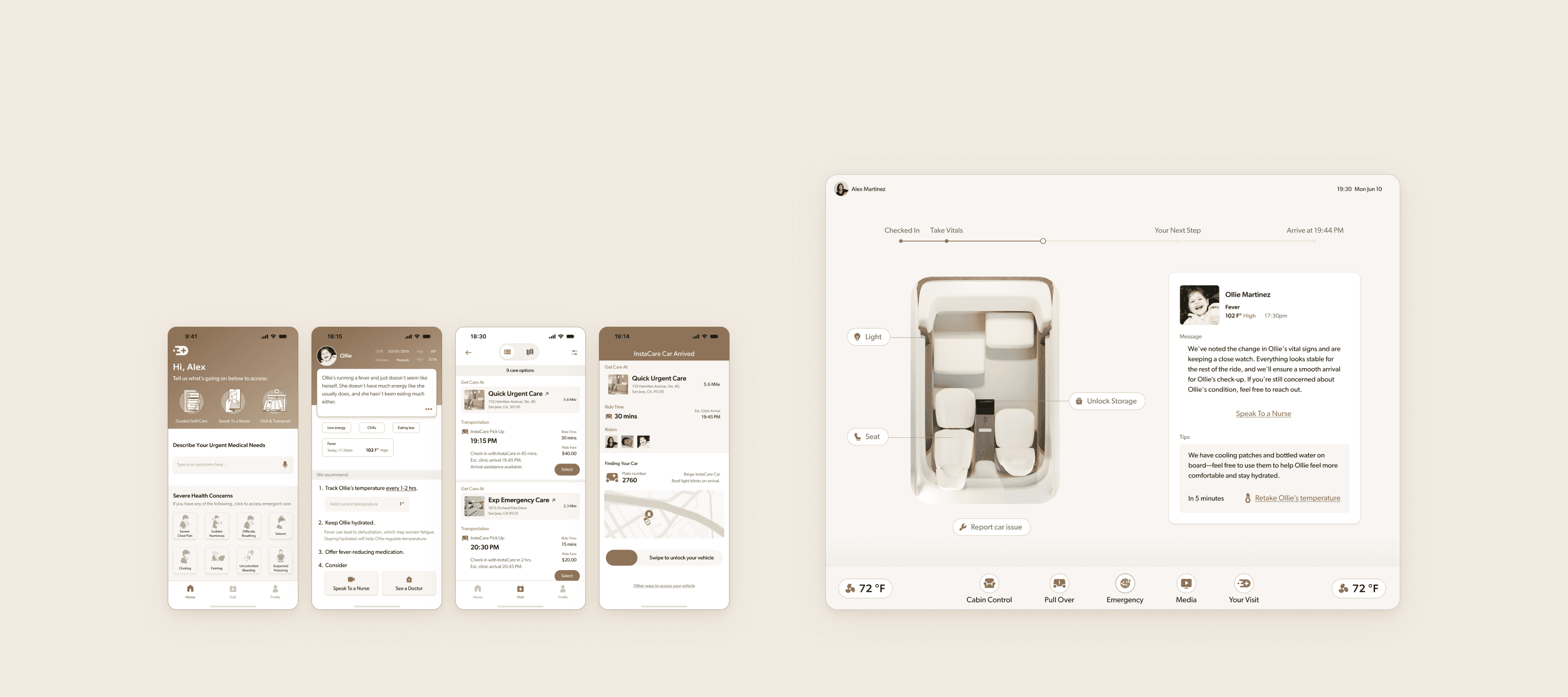
When Alex notices that Ollie isn't feeling well, she opens the InstaCare app and begins entering her symptoms. The app responds with a list of self-care suggestions tailored to Ollie's condition. Alex also has the option to speak with a nurse for self-care guidances.

Schedule InstaCare
Alex follows medical advice, but Ollie’s fever persists. Alone at night with two kids, she chooses InstaCare for doorstep pickup and remote check-in, selects Quick Urgent Care for its pediatric care, timing, and cost, adds the baby, and schedules the visit.

Start Ride
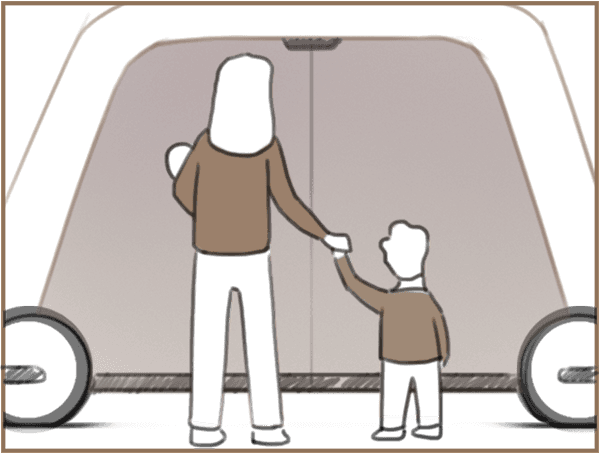
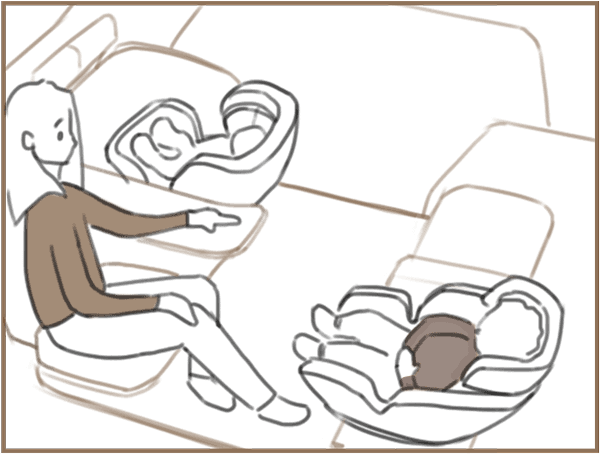
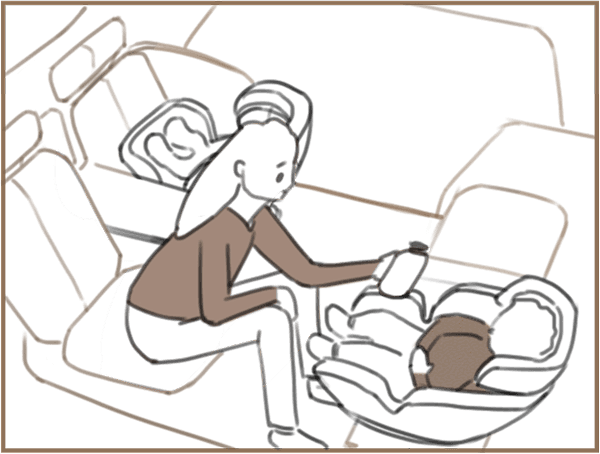
Moments later, their ride arrives at the curb. Alex checks her phone, confirms the pickup, and unlocks the car with a tap before helping the kids inside.






How I Got Here
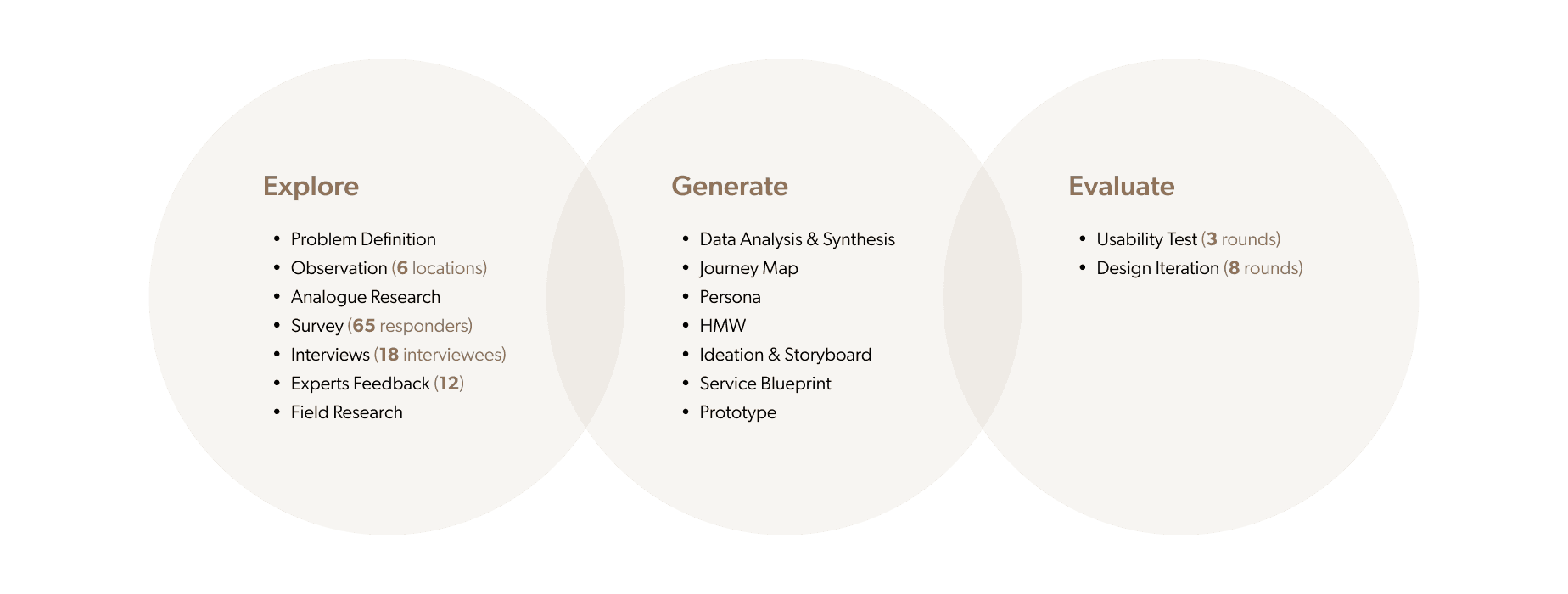
Using a human-centered design approach, I adapted my process to address the gap in urgent medical transport. To ground my speculative concept in real human needs, I integrated generative research methods to gather authentic stories and experiences, helping me uncover deeper insights.
My process was highly iterative. While developing early ideas, I continued conducting expert interviews. Usability testing and design updates happened back-to-back, with each round of feedback informing the next.
Key Finding — Expert Insights
I spoke with nurse practitioners to better understand the triage processes & key differences in how medical teams admit patients to ER (Emergency Room) and UHC (Urgent Care).
"At urgent care, service is typically walk-in, without appointment and first come, first serve. A registration clerk will collect chief complaint, ID, insurance. The front desk person is typically eyeballing the patient and will call for licensed personnel to take a look if there is concern."
I also interviewed experts in the robotaxi industry to learn the limitations and possibilities of fully autonomous vehicles—specifically in the context of urgent healthcare transport.
"From technological standpoint, are there things the car could do that by having you inside of it, it wouldn't otherwise do?"
"The business model for robotaxi, enormously expensive."
Key Finding — Field Study
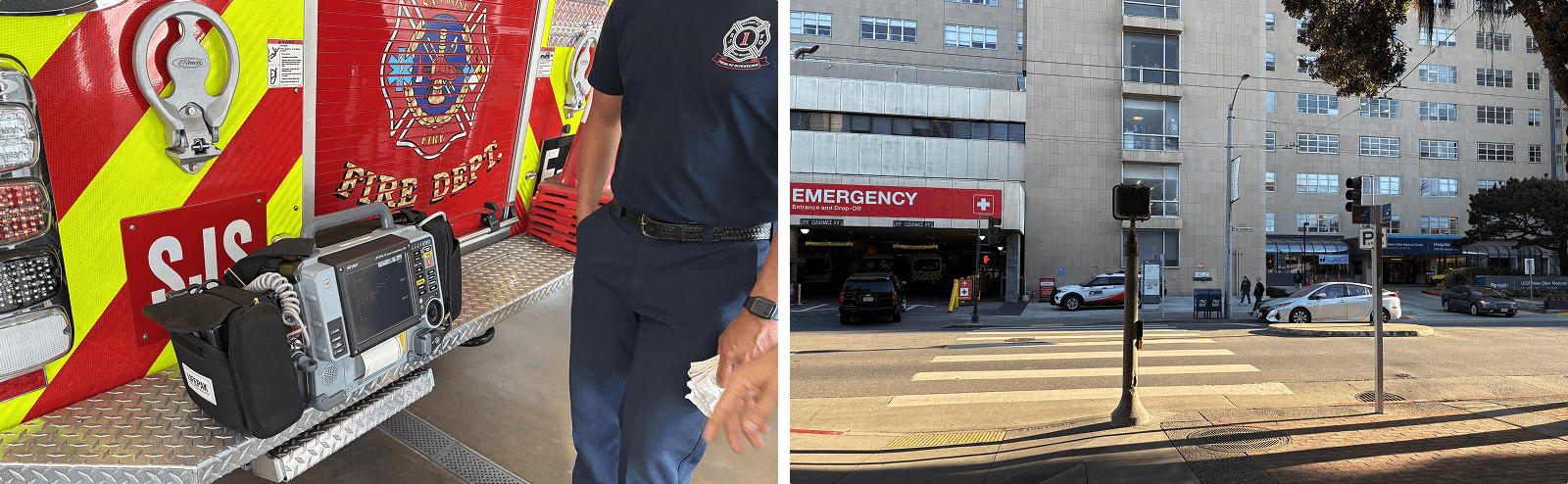
I interviewed paramedics and EMTs to learn about their protocols when assisting people with life-threatening conditions. These conversations helped me better understand how their responses are adapted to the urgency level and individual needs of each patient. I also gained insights into first responder procedures and health indicators they monitor, which informed my design for delivering care en route.
Key Finding — Journey Map
To analyze my qualitative data, I used affinity mapping, empathy mapping, content mapping and problem statement matrix. This synthesis helped me visualize the current pre-clinical intake journey for urgent/emergent care—capturing key actions, emotion states, and pain points across interactions between patients, caregivers, and medical staff. The collective emotional high and lows revealed shared pain points and guided me to identify 3 core problems to address.
Patients and caregivers don't know how to choose between urgent care and emergent care.
Most patients don't know how to contact urgent/emergent healthcare providers at the start of their journey.
Patients and caregivers often have to wait longer than they would like.
Persona & Storyboarding
Design Concept — On-Demand Medical Support with InstaCare
Ideation & Minimum Viable Product (MVP)
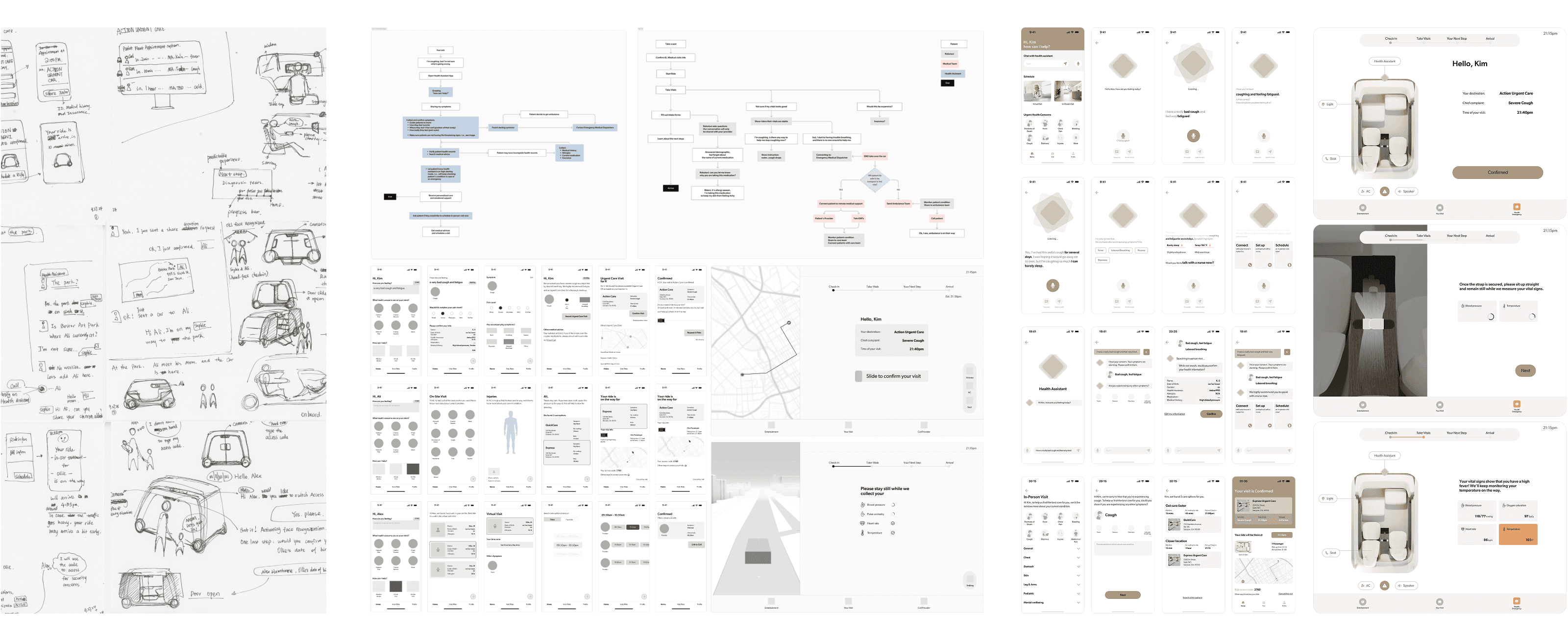
My ideation sketches focused on key touchpoints in the InstaCare journey—searching personalized care, pre-check-in and robotaxi transit, onboard vital taking device interaction, and seamless connection with medical team.
I used flowcharts to define the end-to-end interactions of the InstaCare MVP. Based on these flows, I quickly mocked up wireframes for the self-reliant UC patient persona (Kim).
At the same time, I explored visual themes to facilitate the InstaCare experience. I focused on colors and forms that conveys a sense of calm and trust to help alleviate patients and caregiver anxiety before arriving at care facilities, and soothe their emotions during a health crisis.
Design Validation
The goal was to validate whether InstaCare can help patients and caregivers
🔎 search for reliable medical advice at any time
🩺 receive medical reassurance prior to in-person consultation
😌 feel a sense of agency throughout their care journey.
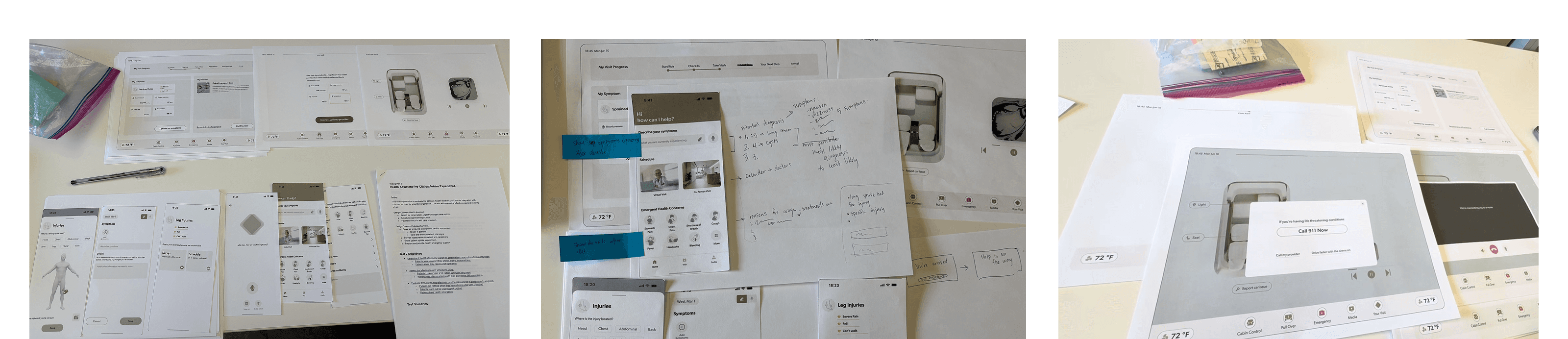
I conducted 3 rounds of in-person, moderated usability tests with 17 participants. Each of the 3 rounds focused on different persona in sequence—Kim, Ali and Alex. This allowed me to progressively increase scenario complexity and iterate the design under varied user needs and contextual challenges.
As InstaCare delivers services across two environments—the mobile interfaces and the in-vehicle ride & HMI experiences, I tested the end-to-end InstaCare journey in the 1st and 3rd rounds. The 2nd round focused on addressing salient usability issue discovered from round 1.
⛈️ 1st Round
Patients struggled to use chat as the entry point for medical advice, but the overall experience (from care search to robotaxi ride) received positive feedback.

🌦️ 2nd Round
Patients wanted to know immediate self-care actions.
🌤️ 3rd Round
Guardian Caregivers wanted clarity on the difference between InstaCare ride and their current options.

Quantitative Feedback
In the first round, I invited 7 participants to rate their experiences at the end of testing session.
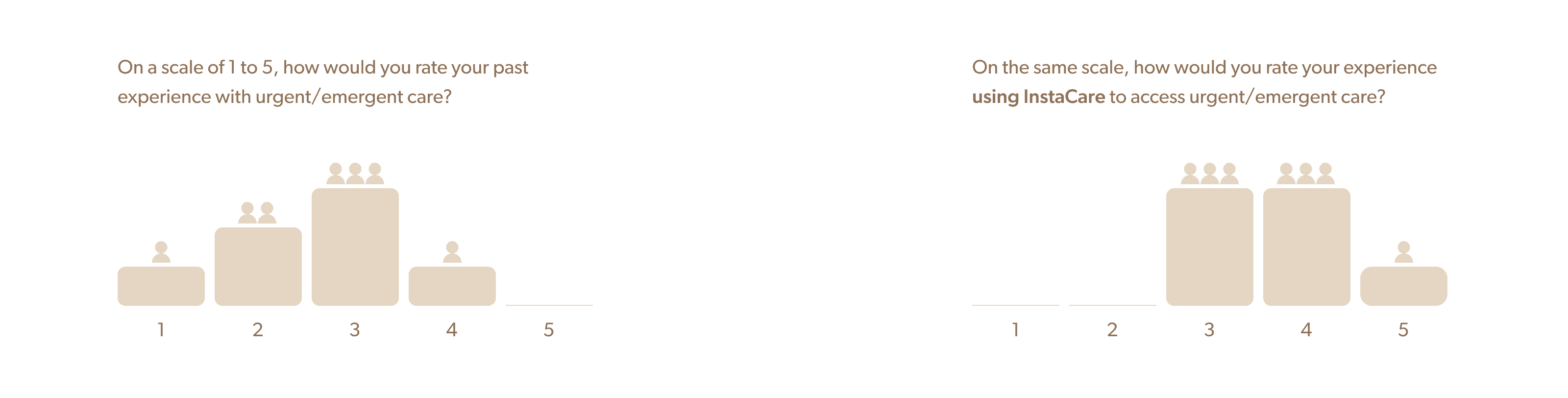
2nd & 3rd Round, I shared a system usability scale (SUS) questionnaire to collect usability feedback.

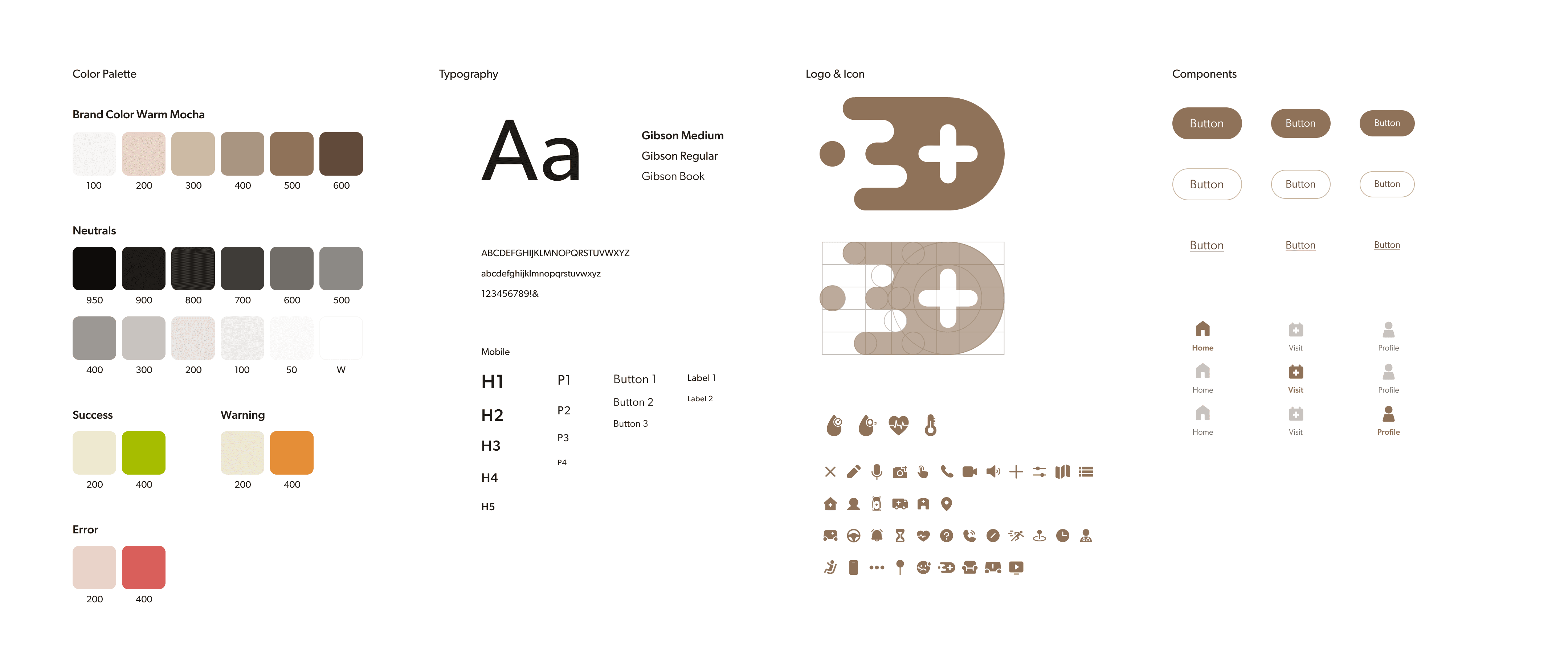
Design System
Feel free to reach out if you are interested in seeing the full design system.
Reflections
My thesis envisions a future where autonomous vehicles and telehealth converge to make urgent care more humane, predictable, and accessible. By pairing a health-focused mobile experience with a robotaxi service, InstaCare extends care beyond the clinic—offering guidance, reassurance, and early clinical context while reducing friction for patients, caregivers, and medical teams.
Moving forward, validating this concept with health insurance experts and medical providers will be critical to understanding its feasibility within existing workflows, implementation constraints, legal considerations, and opportunities for integration across the broader care ecosystem.