UX Research
Sep 2024 — Dec 2024
Participatory Design & Co-Creation—Exploration. Testing. Validation.
Ethnographic Research | Formative & Summative Research | Qual & Quant Data Analysis
Many people use screens to unwind before bed, despite knowing that blue light can interfere with sleep quality. This led me to explore how we might help people wind down before sleep without sacrificing sleep quality. My initial exploration phase revealed that working parents were affected the most by poor sleep quality—due to the difficulty of balancing childcare with their own rest.
The Problem
Working parents with young children often experience fragmented sleep due to childcare needs. These disruptions make it harder to fall asleep and get quality sleep, yet they still have to meet their work responsibilities during the day.
The Design
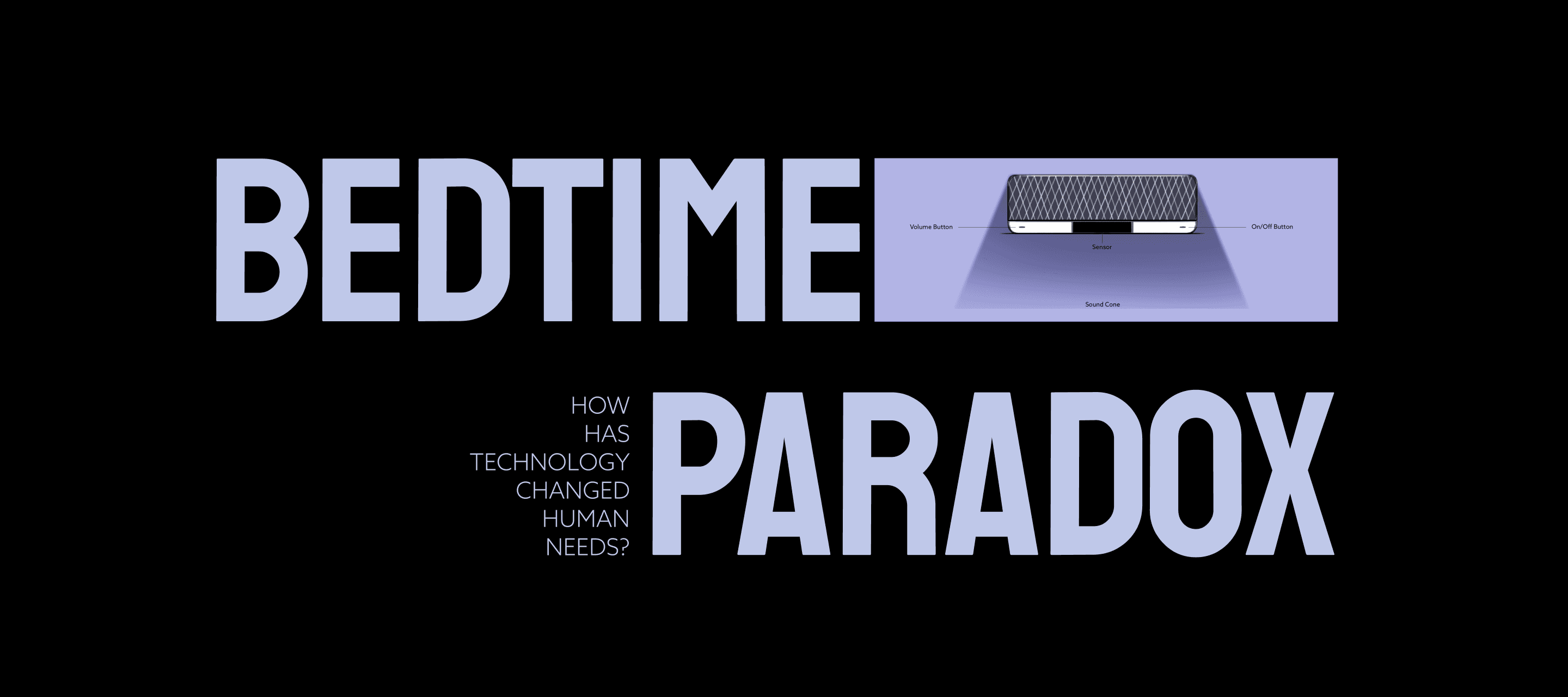
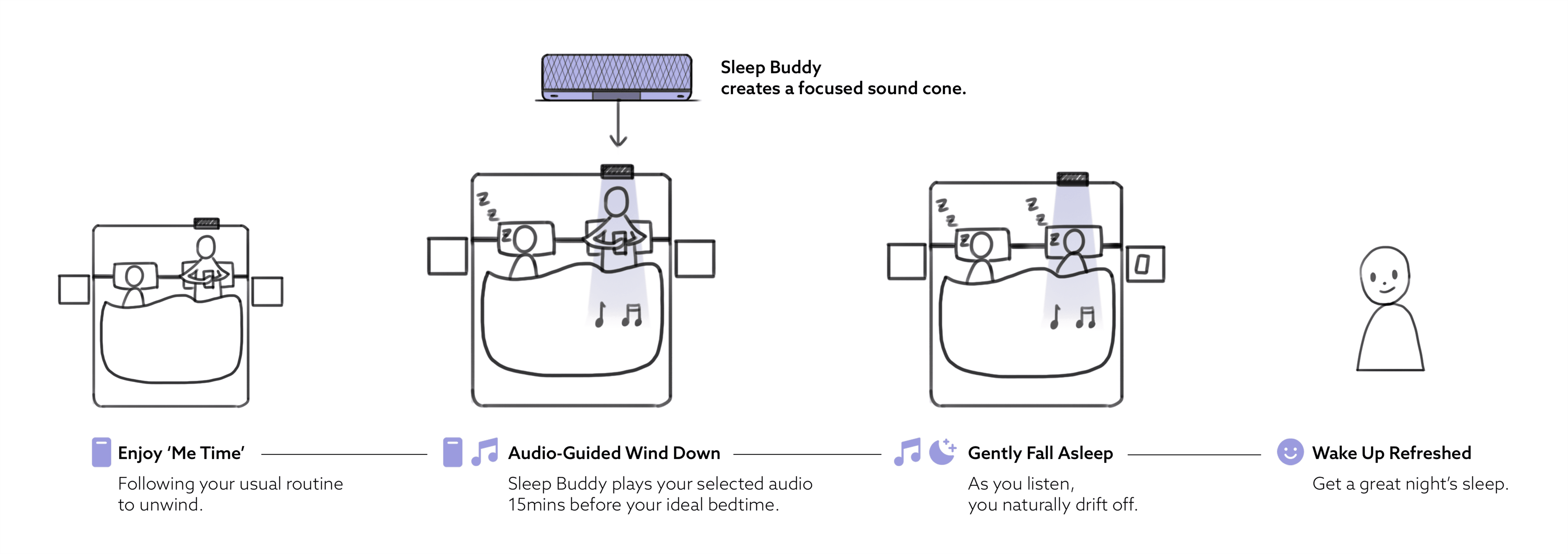
Sleep Buddy is a directional speaker that creates a focused cone of sound, delivering a personalized audio experience. It connects to a mobile device to study sleep patterns. Sleep Buddy plays audio content 15 minutes before an optimal bedtime, helping shift attention and easing the transition from screen time to rest.
The Process
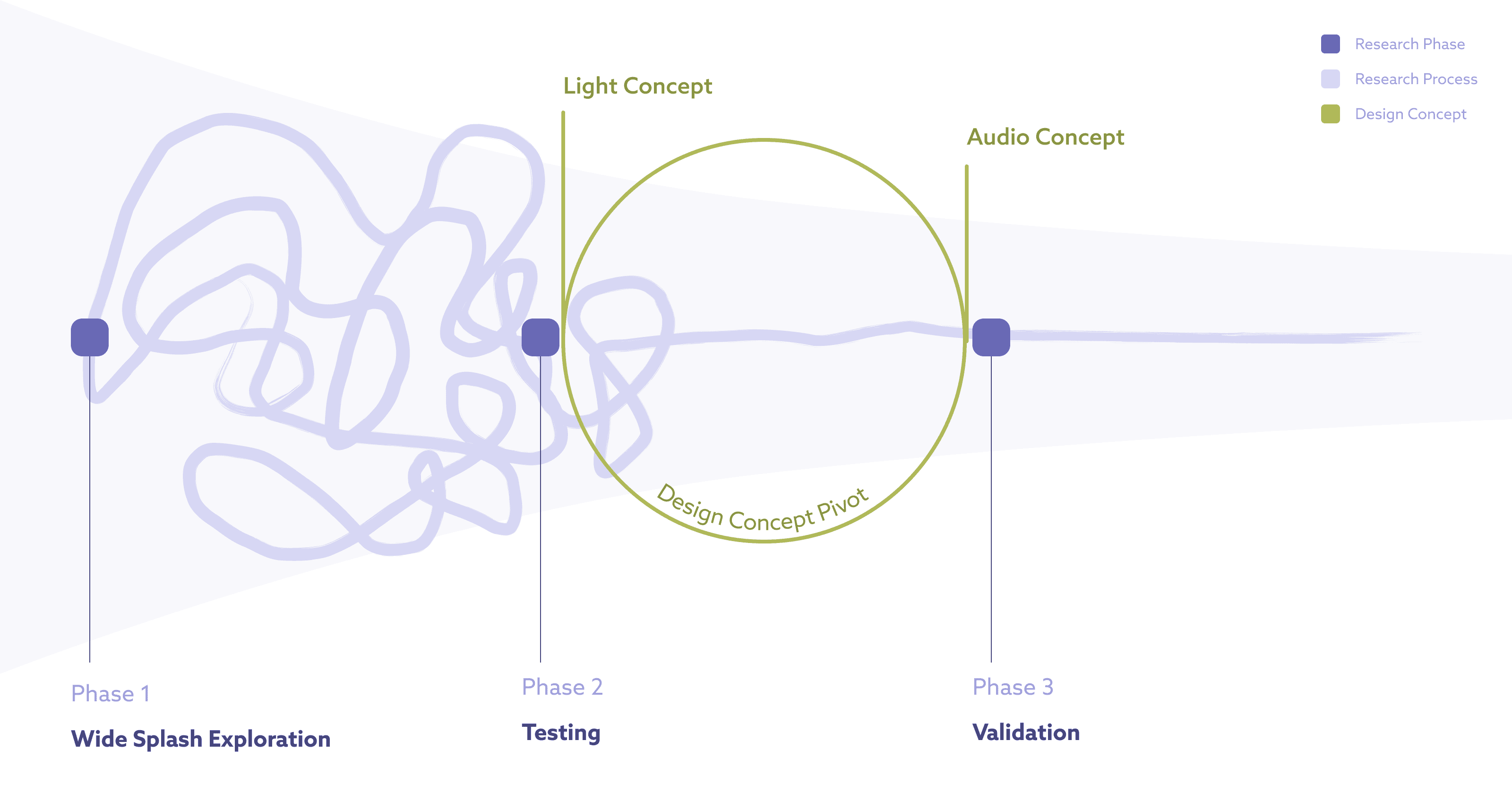
My process followed a three-phase participatory design approach—Explore, Testing, and Validation. I used participatory design methodologies to co-create solutions with a total of 37 participants. Based on insights from the exploration phase, I developed a light concept. However, testing showed that it couldn't meet the needs of the target audience. Grounded in participant feedback, I pivoted the design and validated a new audio concept (Sleep Buddy) in the final phase.
Phase 1. Wide Splash Exploration
Research Methodologies
Secondary Research
Expert Interview
Interview
Co-Creation — Draw Your Experience
Both my secondary research and expert interview (with a primary care provider) highlighted the importance of good sleep habits in improving sleep quality. However, the advice on forming good sleep habits was generic, such as: "sleep at the same time and wake up at the same time," "manage stress through meditation, journalling, and exercises," and "avoid screens before bed." To gain deeper insights into sleep habits, I reached out to 8 participants across a wide age range and invited them to share their sleep routine.
Since directly observing participants preparing for sleep wasn't appropriate, I used a diary study to gather initial contextual data. I began with a 20-minute introductory call with each participant to learn more about them, introduce the diary study, and share a questionnaire. Participants were asked to record their bedtime activities over 3 days (including weekday and weekend). In the dairy study, participants documented their activities and emotions every 15 minutes during the hour before sleep, using text, photos and videos.
After the diary study was completed, I analyzed each participant’s entries with my notes from the initial call and questionnaire. Then I scheduled a second-round interview with each participant to dive deeper into their thought process and the reasons behind their habits. This approach helped me better understand each participant’s sleep environment, room setup, and the locations where the activities they described took place.

Key Insight — Light as a Cue
Participants, who rated their sleep quality as medium to high, use light as a cue to signal that "it's time to sleep." They adjust the color and brightness of the light to help shift their mindset from awake state to rest.
“Turn off light is a signal I use to tell myself it’s time to sleep."
“I have a floor lamp. I use bright light when working and switch to a dim yellow light when I feel it’s time to sleep.”
Key Insight — From Stimulation to Rest-Ready
Participants with higher sleep quality tend to purposefully transition from highly engaging activities, like gaming, to calmer ones, like re-reading a familiar book. This helps them enter a sleep-ready state.
"Cooking videos help me switch my mind from study & work mode to relaxation & sleep mode."
"Read a book I've read before helps me fall asleep."
Key Insight — Using Phone to Cope with Sleep Disruption
Participants who experience disrupted sleep often have a harder time falling back asleep after waking up in the middle of the night. They often tend to stay on their phone until they feel tired.
"I can wake up immediately as soon as I sense my kid is awake. When I wake up in the middle of the night and can't fall back asleep, I tend to scroll my phone—but this makes it harder to fall back asleep."
Light Concept
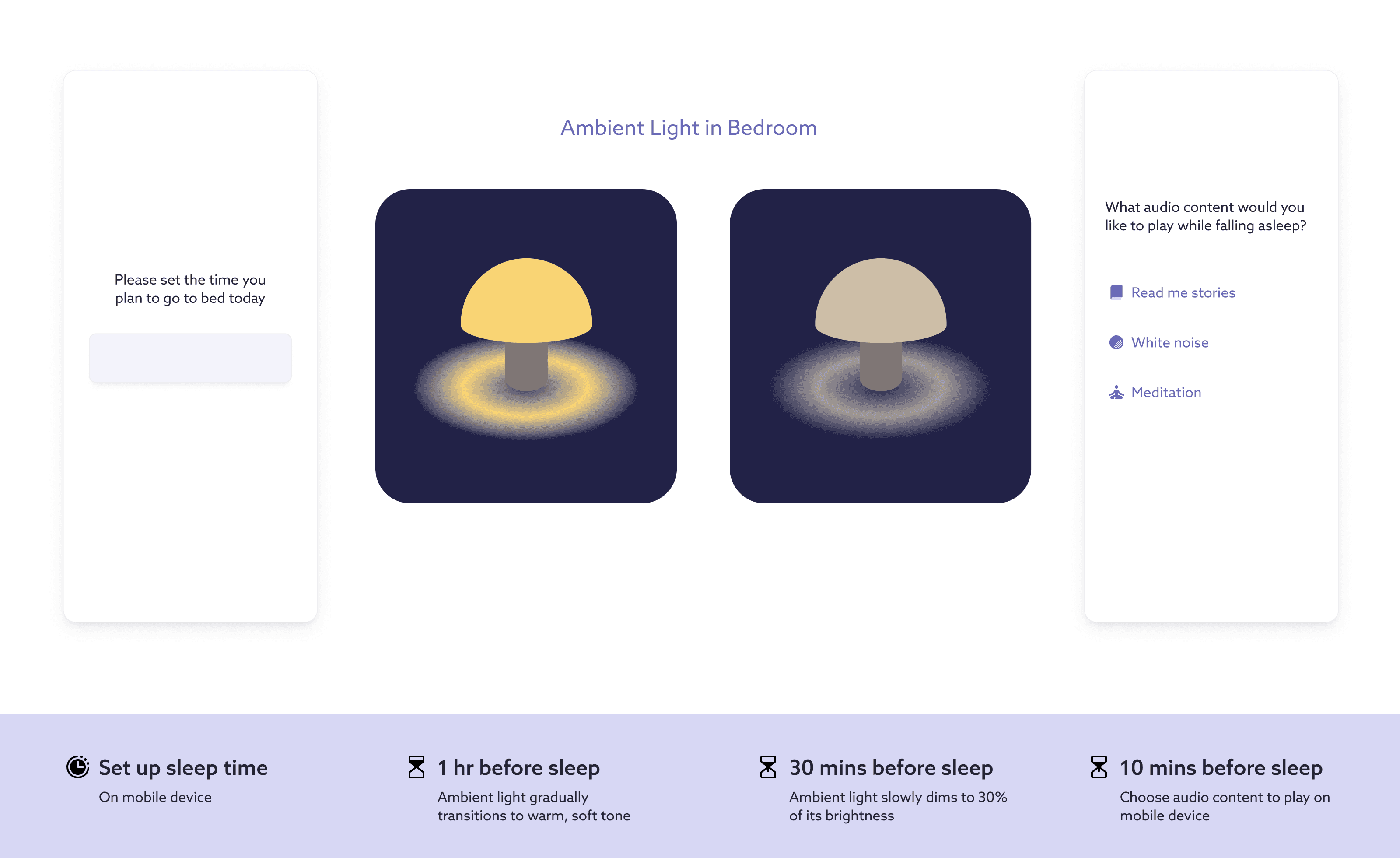
Based on these insights, I developed a design concept: an ambient light with app-based control. Users can set their bedtime and select preferred audio content in the app. The light, placed by the bedside, automatically adjusts its brightness and color twice (1 hour and 15 minutes) before the scheduled sleep time. As bedtime approaches, the selected audio content plays to help users relax and drift off to sleep.
Phase 2. Testing
Research Methodologies
Co-Creation Sessions—Card-Sorting
Design Evaluation Questionnaire
Interview with Extreme Users
As I narrowed my target audience to working parents with young children, I continued the research with 3 participants from Phase 1 and recruited 3 new participant who are also working parents with young kids.
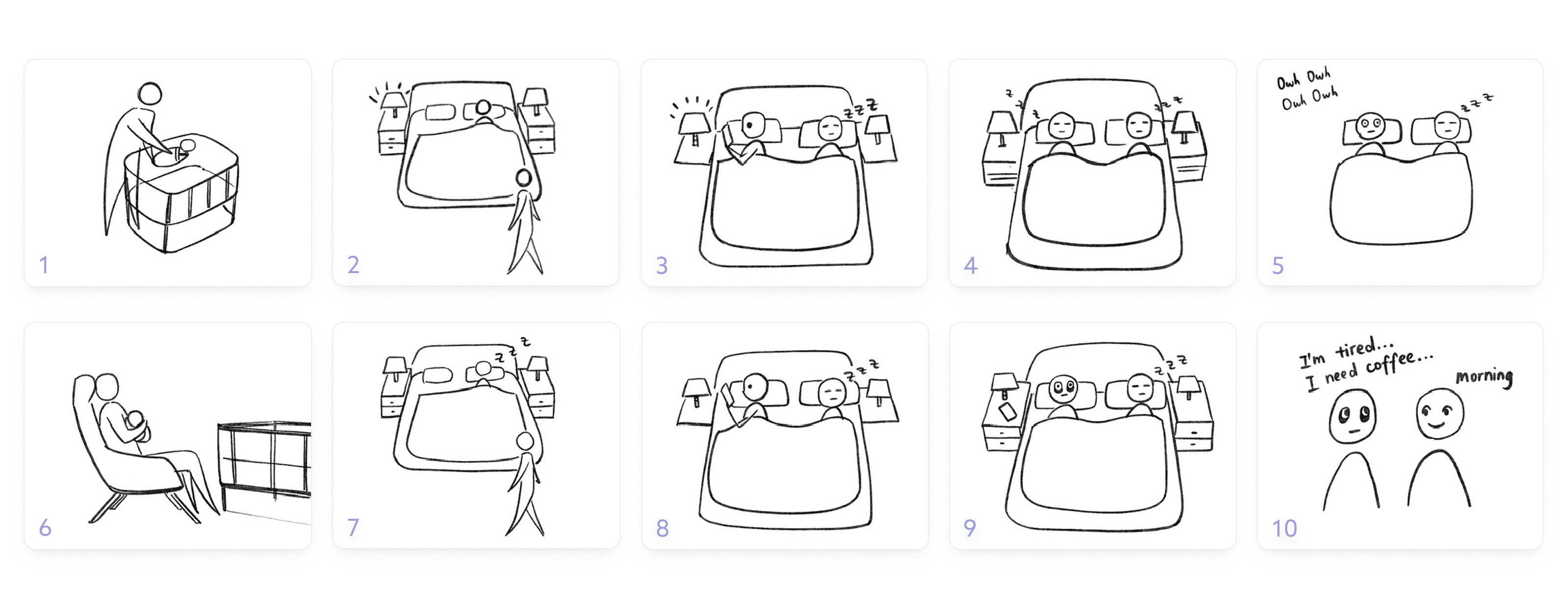
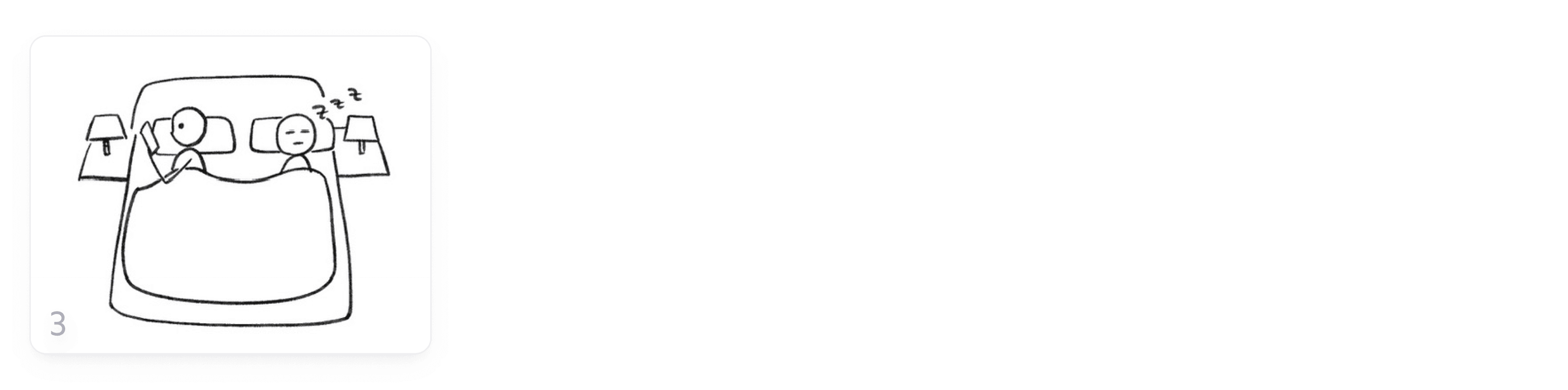
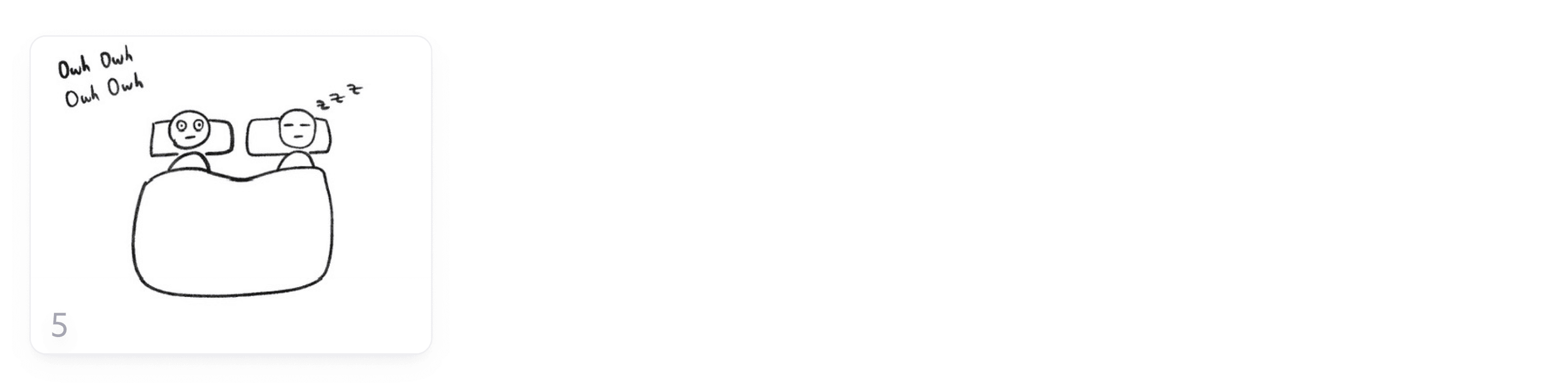
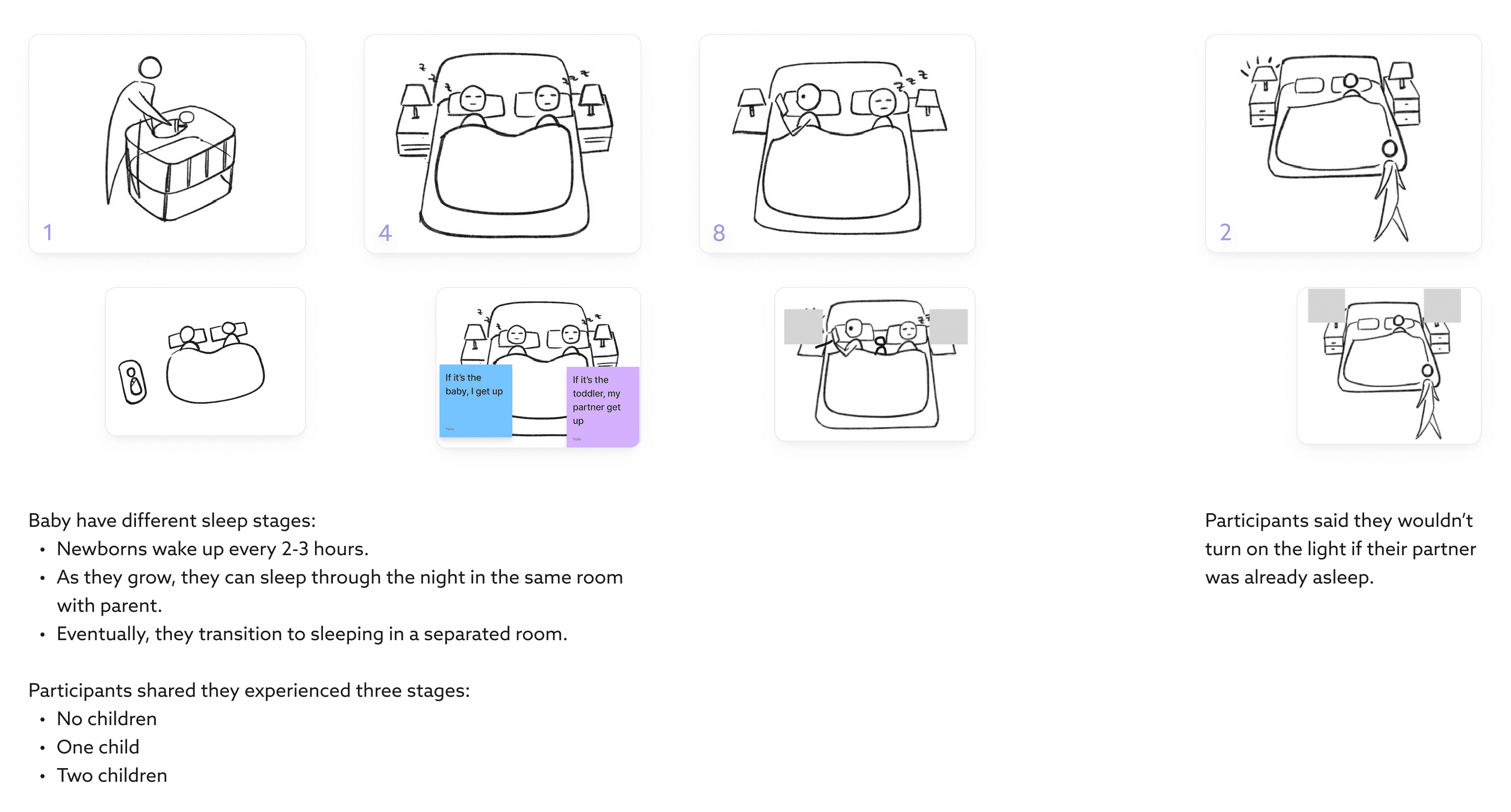
I created storyboards illustrating a 10-step journey commonly experienced by working parents—from preparing for bed, waking up during the night, and having a hard time fall back to asleep. I shared the storyboards with participants and invited them to share their own experience by rearranging, removing or adding scenarios that are not included to the journey.
To further understand fragmented sleep, I also interviewed firefighters— extreme users who often experience severe sleep disruptions while on duty at the station—about their sleep habits.
Key Insight — Me Time vs. Sleep
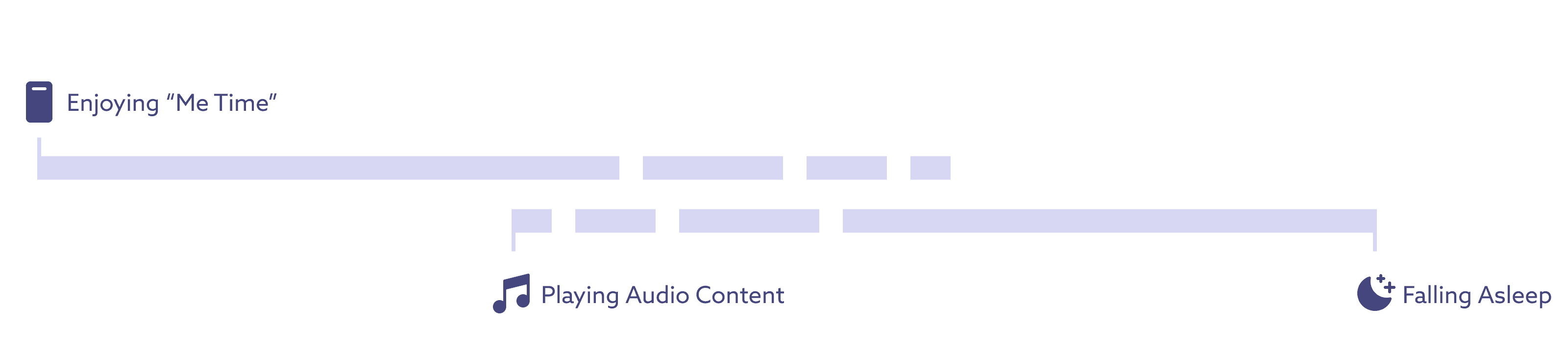
Participants shared that even though they feel tired at the end of the day, it's also their only moment of pause—a quiet time when no one needs anything from them. They know that the next day, the demands of childcare and work will begin all over again.
Key Insight — Sensitive to Light
Both working parents and firefighters described themselves as light sleepers who are also very sensitive to light. To help themselves fall asleep, they keep the room dark.
“After having kids, I got very sensitive to light and sound at night. I became much lighter sleeper. I need a dark dark dark room to go to sleep. My shades are blackout shades.”
"Our dorm room’s blinds are always closed. when you're here at the station, you're not in your own bed, so you don't get the best sleep."
Key Insight — Anxiety Over Unpredictable Sleep Disruptions Keeps People Awake
When a baby wakes up during the night, parents often feel anxious because they don't know when the baby will wake up again.
Similarly, firefighters shared that the constant potential of getting an emergency call can lead to much worse sleep at the station.
Key Insight —Consider Other Family Members
Participants are also mindful of not disturbing others in their sleeping environment. For example, they avoid turning on a light if their partner, baby, or co-worker (in the case of firefighters) is already asleep in the same room.
Design Concept Pivot
Testing sessions showed,
3/6 participants are sensitive to light.
2/6 participants don’t use or consider light as a cue for sleep.
2 extreme users (firefighters) said their dorm room is always dark.
3/6 participants said they listen to audio content before sleep.
2 extreme users said their colleges are trying meditation and breathing exercises.
From Questionnaire,
2/6 participants think they need the light concept.
2/6 participants think they probably need the light concept.
2/6 participants think they probably don’t need the light concept.
Based on findings from Testing Phase, the light concept does not meet the needs of working parents or extreme users to improve their sleep habits. Therefore, this concept should not be developed further.
Instead, both groups indicated a preference for audio content before bed.
Reframing the Problem
Based on the key insights, I chose to focus on:
How might we help working parents balance their need for ‘me time’ with maintaining healthy sleep hygiene?
Design Guideline
Create a soothing transition that helps working parents shift their mindset from 'me time' to sleep.
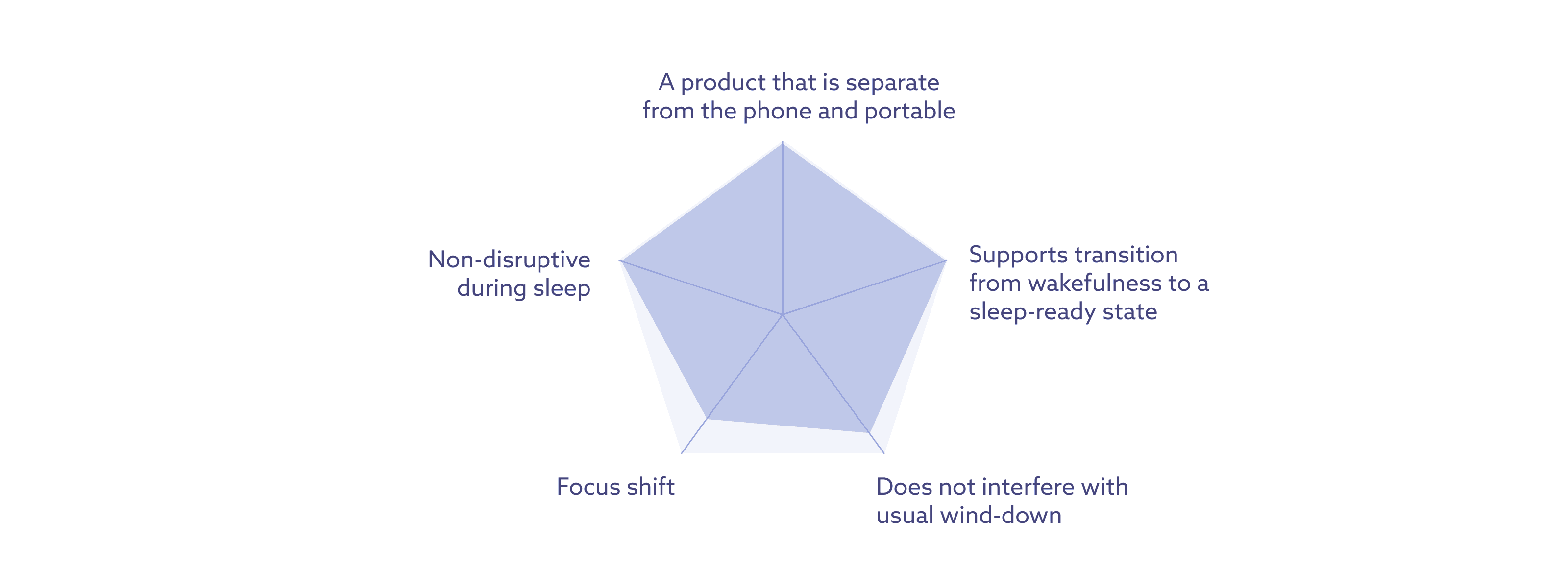
To ensure my design concept aligned with the design guideline, I defined 5 design criteria to guide concept development.
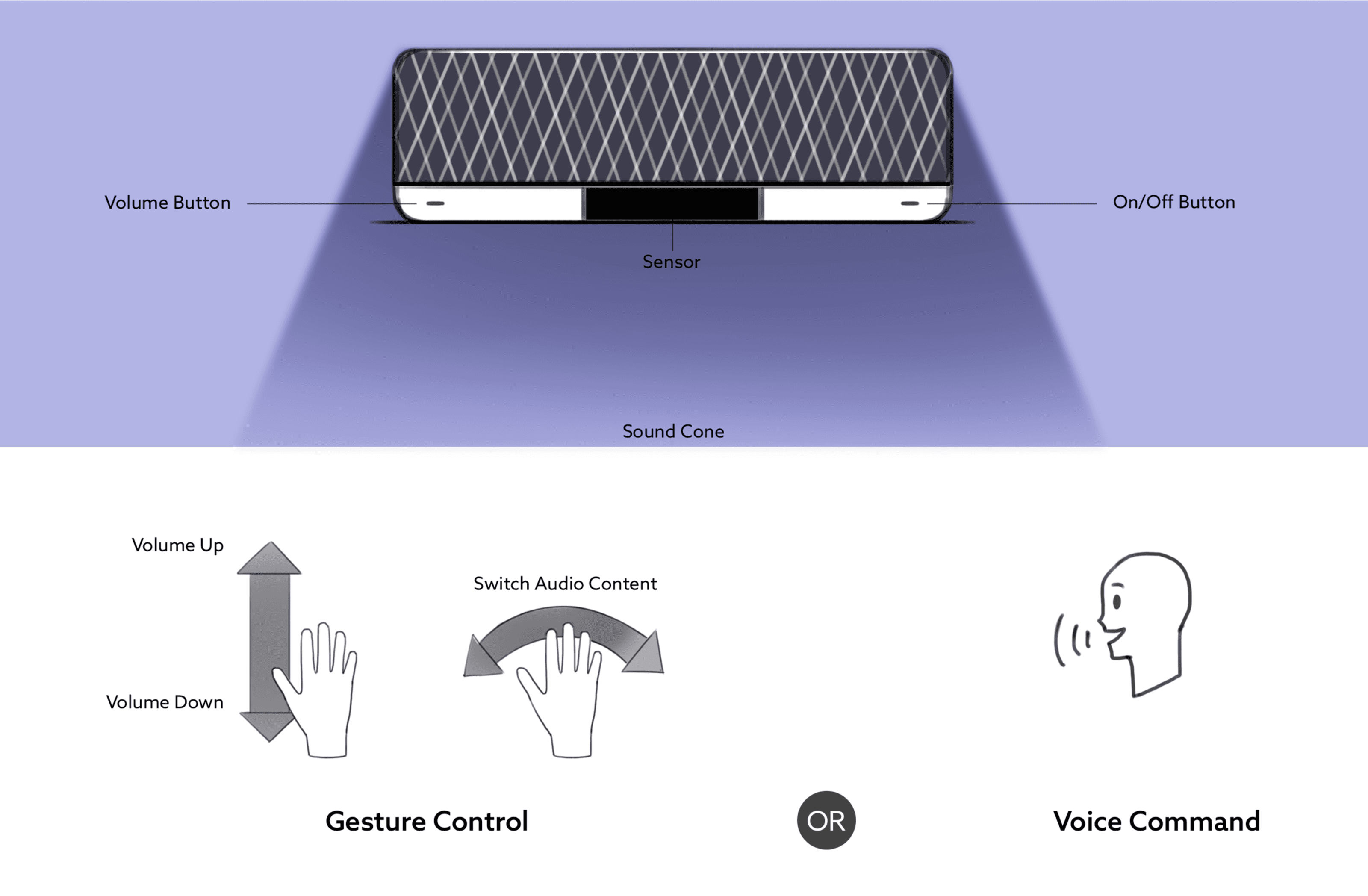
Audio Concept—Sleep Buddy
Sleep Buddy is an app-connected directional speaker that creates a focused cone of sound, providing a personal audio experience without disturbing others. It connects to a mobile device that studies sleep patterns and automatically plays audio content users’ choice 15 minutes before their optimal bedtime, helping shift attention away from screens and preparing the mind for sleep.
(Add image)
Why does the audio content start 15 minutes before optimal bedtime?
“Exposure to light suppresses melatonin, however, melatonin recovers rapidly within 15 minutes after light exposure terminates.”
—Tähkämö et al., Chronobiology International, 2019
Phase 3. Validation
Research Methodologies
Co-Creation Sessions
Survey
Competitive Research
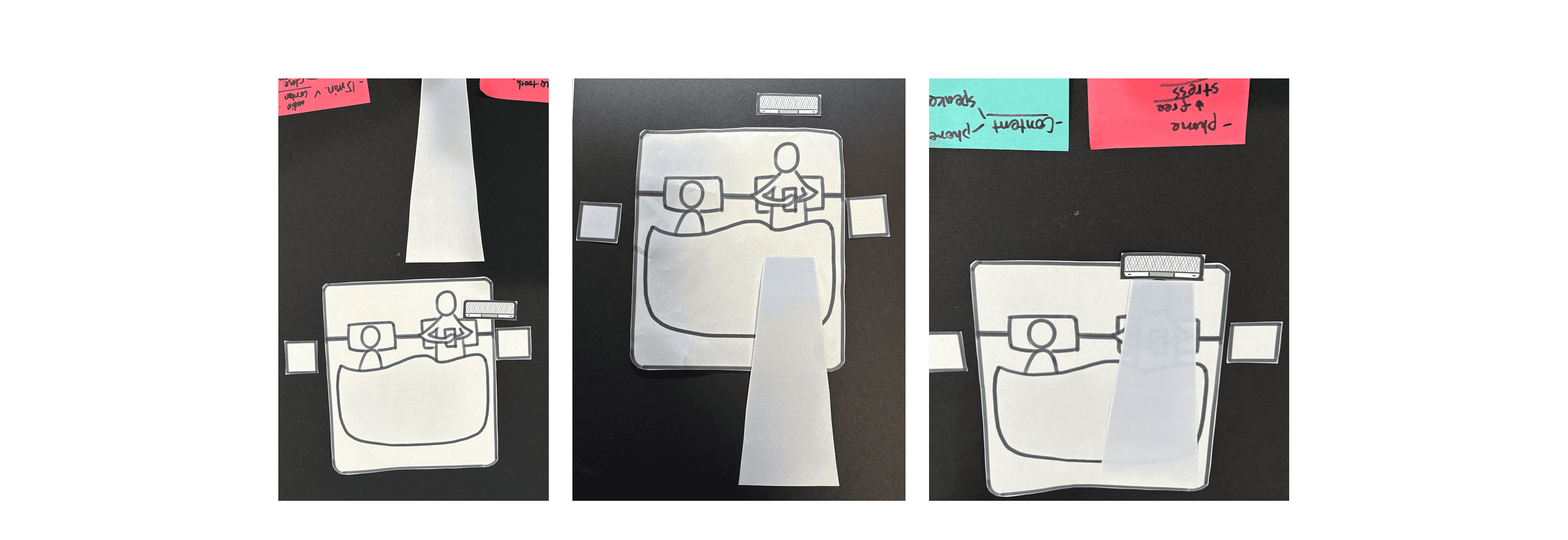
I invited 4 working parents to participate in individual co-creation sessions to validate the Sleep Buddy concept. I prepared two sets of storyboards: one representing current sleep hygiene and another showing sleep hygiene using Sleep Buddy speaker. I printed elements of the sleep scene (bed, nightstand, sound cone, and Sleep Buddy speaker) and invited participants to arrange them while sharing their thoughts.
To further validate the Sleep Buddy concept, I distributed a design evaluation questionnaire via
Google Forms
11 participants including working parents and extreme users
Maze
10 responses from people aged 20-45 (5 male, 5 female)
Validation Findings
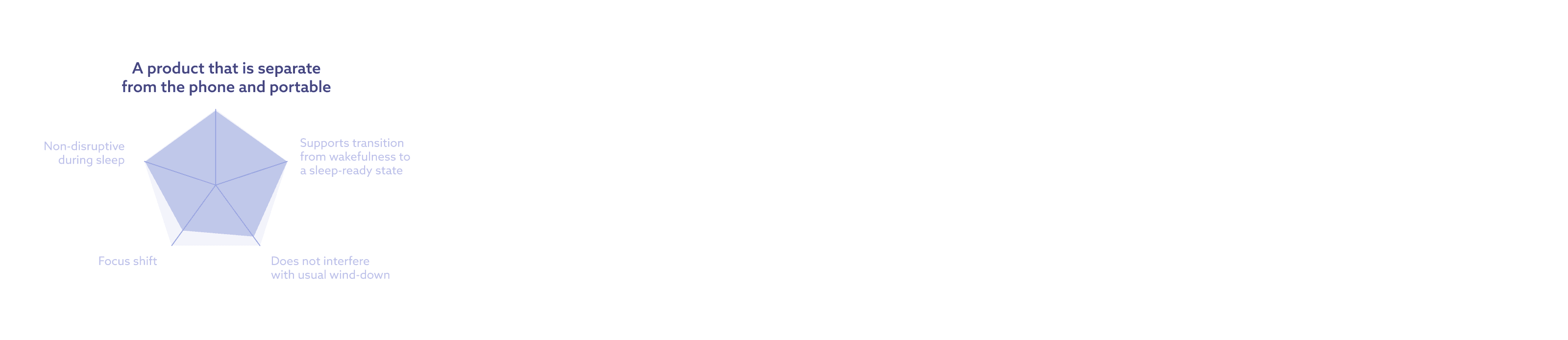
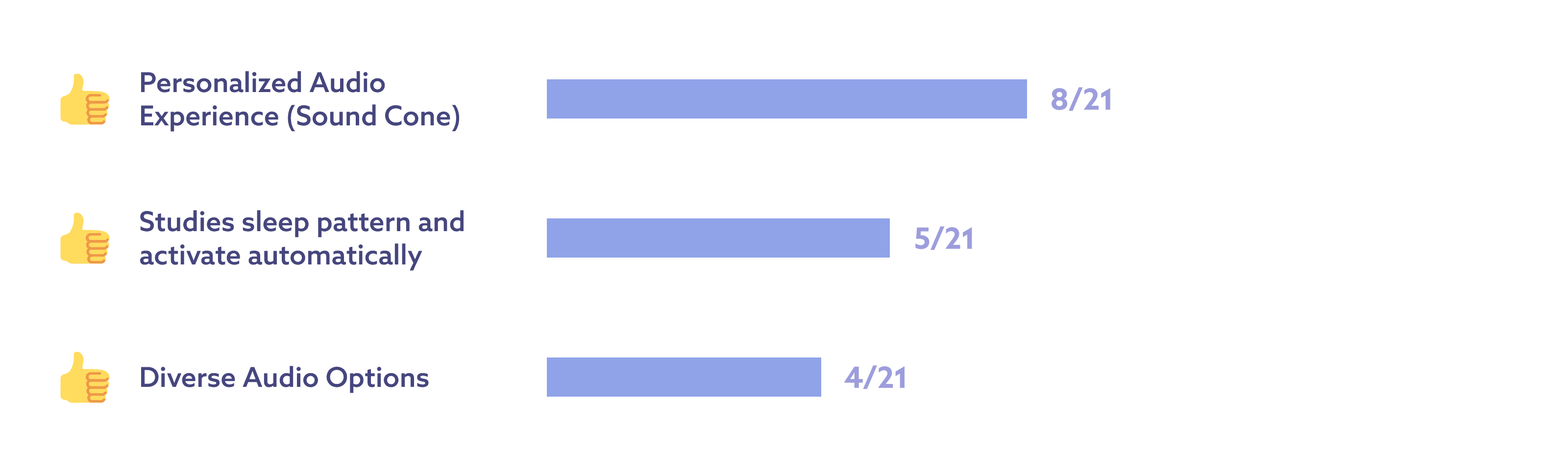
Participants liked being able to rely on Sleep Buddy to fall asleep without touching their phone. They also valued its ability to connect to a phone to study sleep patterns.
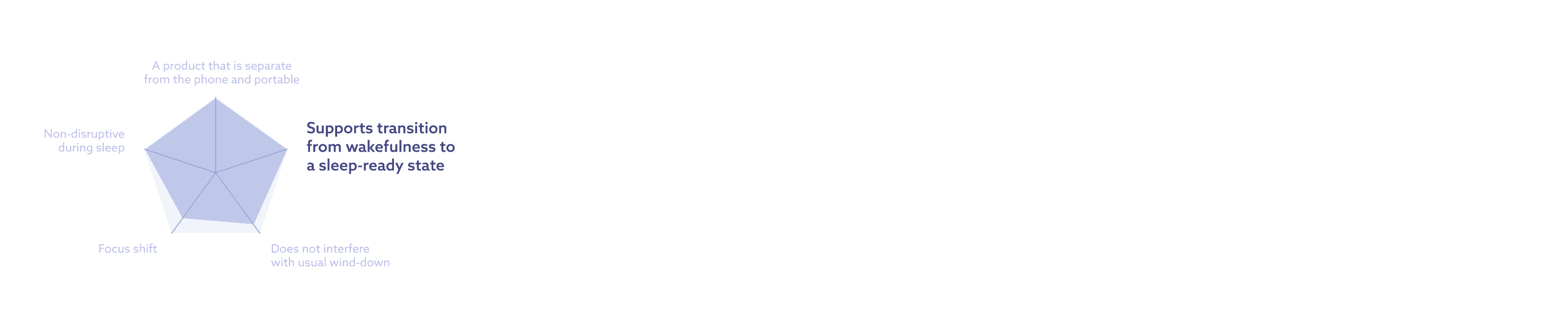
Participants liked the idea of using audio content to help them gradually transition to sleep.
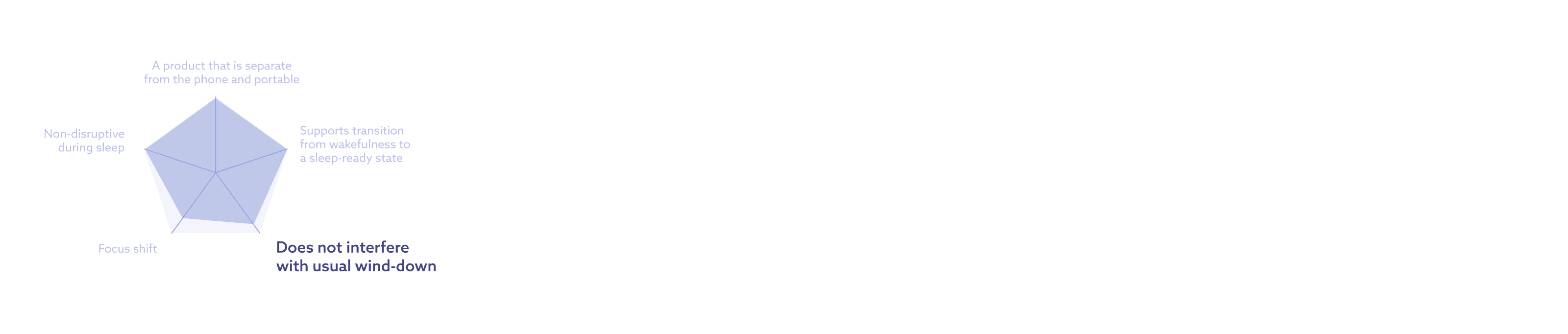
Participants questioned about the effectiveness of the audio content in pulling them away from their usual wind-down.
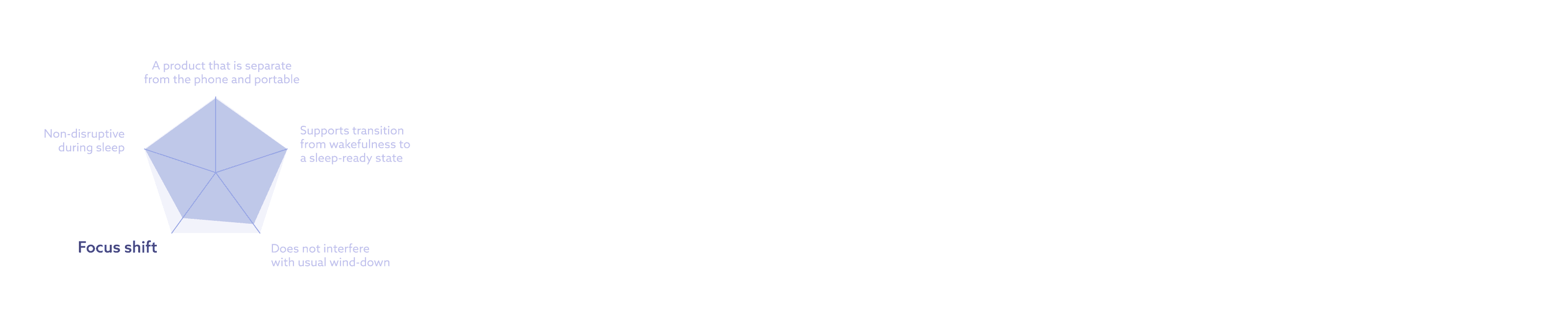
Further research is needed to validate whether automatically playing audio content can effectively help participants shift their focus.
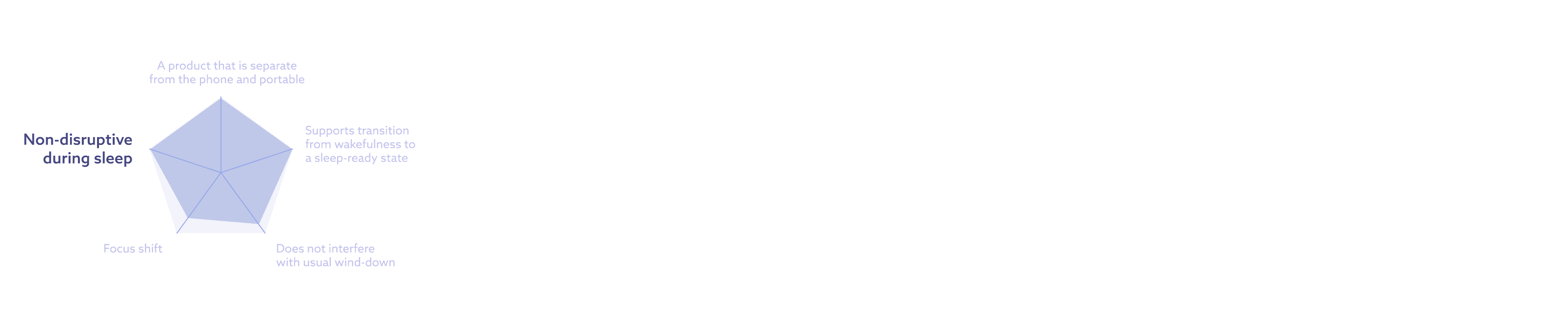
Participants prefer quiet control (e.g., gesture) to avoid disrupting others’ sleep. Location of the speaker (sound cone) needs further research.
Outcome
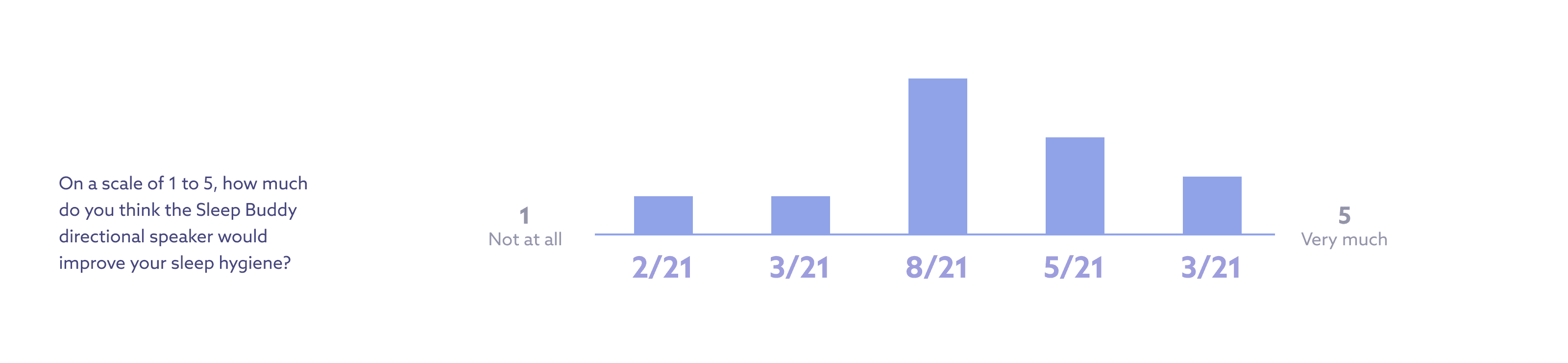
Out of 21 participants, the majority rated the Sleep Buddy directional speaker moderately (8 out of 21 participants) to positively (8 out 21 participants) for its potential to improve sleep hygiene.
The most favored design feature among participants is personalized audio experiences, which helps them transition into a sleep-ready state without disturbing others in the room.
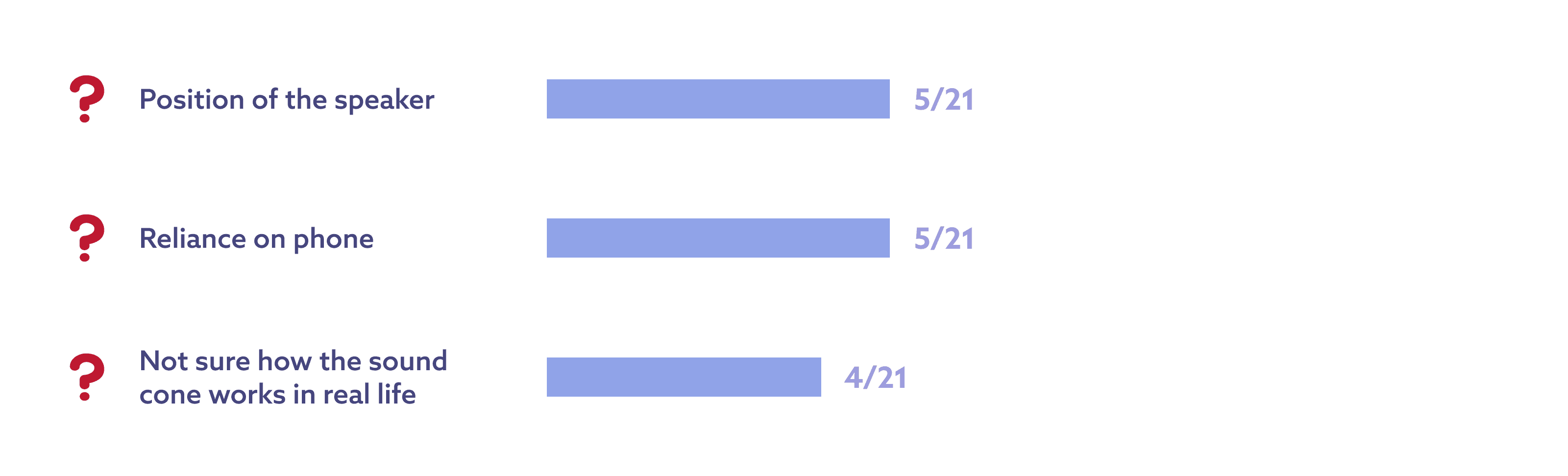
Participants questioned the current speaker placement (at the top of the bed) and the effectiveness of the sound cone. Further testing is needed to assess directional speaker performance in a bedroom environment
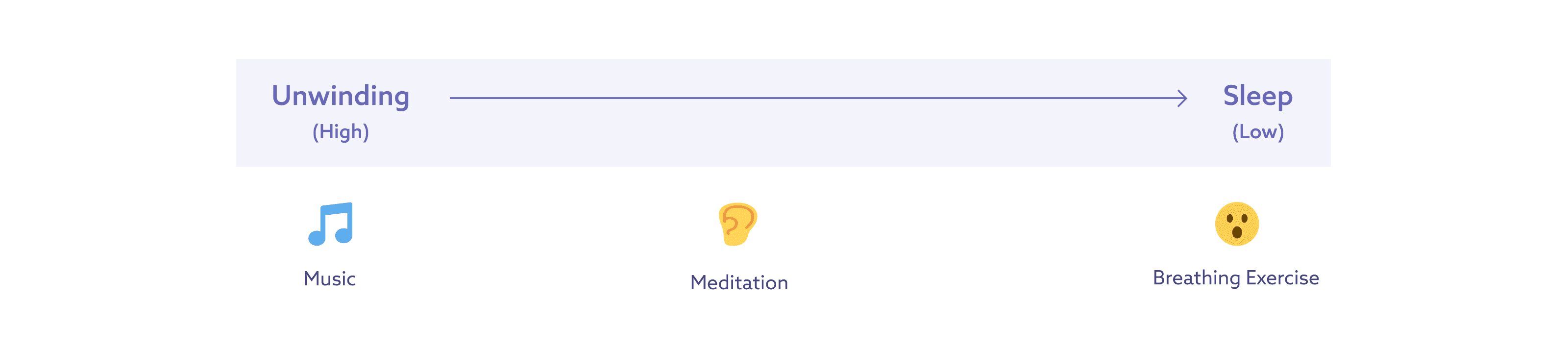
Preferred audio content type for gradually transitioning from unwind to sleep-ready state (engagement level from high to low)
Lesson Learned
Sharing early-stage designs during co-creation sessions felt uncomfortable at first, as the design concept was still at a low-fidelity state. However, I learned the essence of co-creation isn’t about presenting a perfect solution; rather, it’s about collaborating with users and embracing ambiguity to build better solutions together. These co-creation sessions taught me to stay open when my assumptions were challenged and empowered me to adapt, learn and design more effectively.
Next Step
While developing Sleep Buddy concept, I conducted a competitive research to study the current products helping improving sleep.
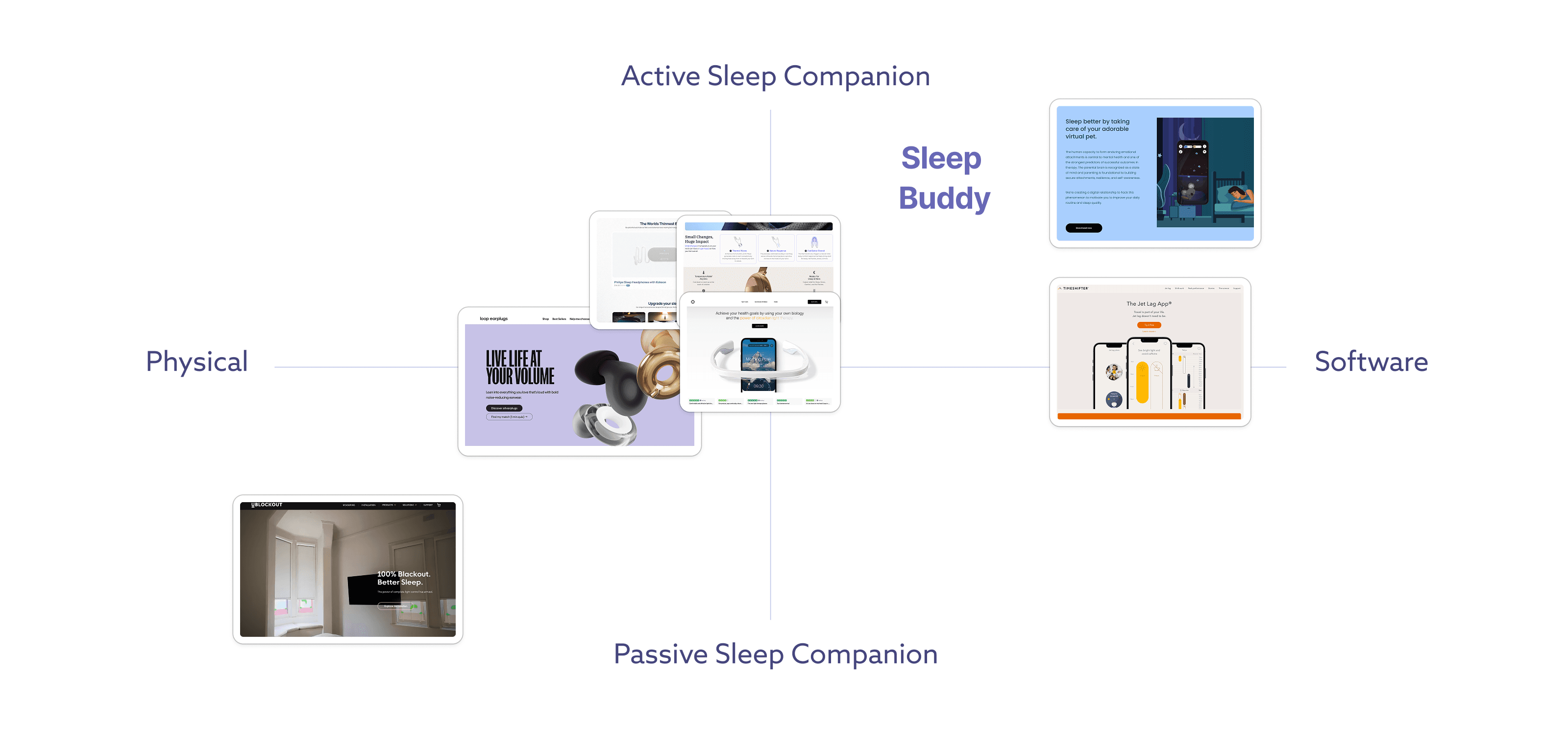
Currently, trying out Nintendo Alarmo for further competitive research!
